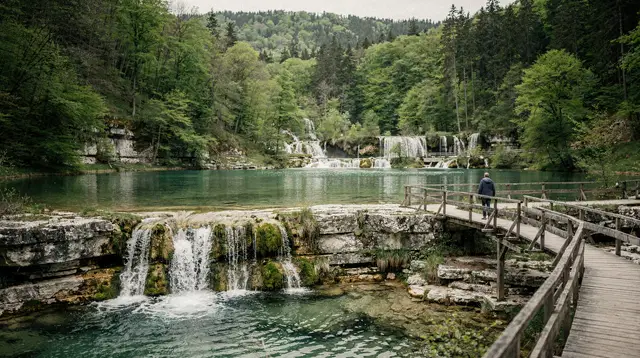
Plitvice Lakes Small-Group Tour from Zadar
What is a small-group guided tour to Plitvice Lakes from Zadar?
It's a day trip in a smaller vehicle with a live guide, leaving Zadar for Plitvice Lakes National Park and its 16 UNESCO-listed terraced lakes. A guide walks the boardwalks with you and handles the timed entry ticket, which in summer should be booked in advance. Swimming is not permitted anywhere in the park.
Why go with a small group instead of alone
Plitvice Lakes National Park is the kind of place where the terrain does most of the talking — sixteen lakes stepping down through forest, connected by waterfalls and wooden boardwalks that hover just above the water. You can absolutely visit on your own, but a small-group guided tour from Zadar solves two problems at once: the drive, which is about 120–130 km and roughly 2 hours each way, and the ticket, which in high season is timed and needs to be booked to a specific arrival slot. A guide who does this daily also knows where the boardwalks bottleneck at midday and how to route around the worst of it, which matters more than it sounds once you’re standing in a queue of tour buses.
“Small group” is a format, not a fixed headcount — it means a smaller vehicle and generally fewer people around one guide than a full coach tour, so don’t expect a promised number; check what a specific listing states about its vehicle and pace before booking.
The 16 lakes, briefly
Plitvice’s sixteen lakes were inscribed as a UNESCO World Heritage Site in 1979, and the number is worth holding onto because it’s easy to lose track once you’re inside the park — the lakes step down in two linked clusters, the Upper Lakes and the Lower Lakes, joined by travertine barriers that build up naturally over time as minerals deposit on plant matter. Water moves between them constantly, spilling over these barriers as waterfalls large and small, which is why the sound of falling water is more or less constant on the boardwalks. The lakes shift color with the light and the season, from turquoise to deep green to near-grey on an overcast day, and that variability is part of what makes repeat visits worthwhile rather than repetitive.
A typical small-group day trip from Zadar covers a loop through both the Lower and Upper Lakes, usually combined with a crossing by the park’s electric boat across the largest lake, Kozjak, and sometimes a stretch on the panoramic train that links the two main entrances. Exactly which route your guide takes depends on the season, crowd levels on the day, and which entrance the ticket routes you through — a good guide adjusts on the ground rather than forcing a fixed plan through a crowded boardwalk.
Timed tickets: the part to plan around
This is the detail that catches people out. In summer, Plitvice sells timed-entry tickets — you’re assigned an arrival window rather than a general day pass, and the most popular windows can sell out well ahead of the visit date. If you’re booking a guided small-group tour, this is usually handled for you as part of the package, which is one of the clearest reasons to book ahead rather than show up and hope. If you’re weighing whether to go guided or independent, this ticketing pressure alone tips the balance for a lot of visitors during July and August.
For exact entrance fees, current ticket tiers, or which entrance (1 or 2) a specific tour uses, don’t rely on a number printed here — check the live listing for the tour you’re booking, since these details are the ones most likely to shift season to season.
a small-group guided day trip to Plitvice Lakes with timed entry includedWhat the day actually looks like
Most small-group tours from Zadar leave early in the morning — the 2-hour drive means an early departure buys you more daylight at the park and, ideally, a head start on the crowds. The route out typically threads inland past the edge of Velebit country before climbing into the wooded plateau where Plitvice sits.
Once inside, the walking is mostly flat to gently sloped, on wooden boardwalks that hug the water’s edge — comfortable shoes with grip matter more than fitness level, since the surfaces get slick with spray near the larger waterfalls. Groups usually spend several hours moving through the Lower Lakes first, where the waterfalls are more dramatic and closely spaced, before crossing by boat and continuing into the Upper Lakes, which spread out more and feel calmer. A guide’s value here isn’t just narration — it’s knowing which viewpoints get crowded at which hour and adjusting the pace accordingly.
For travelers who’d rather set their own pace on the boardwalks while still having a guide along, a half-day guided tour focused on the park’s core lakes and viewpoints covers the highlights without committing to a full day away from Zadar. Those who want the boat crossing folded explicitly into a single guided walk might prefer a guided walking tour of the lakes that includes the electric boat ride, which removes the guesswork around timing that crossing yourself.
No swimming — ever
It bears repeating on its own, because it’s the single most common expectation visitors arrive with and the single rule that has zero exceptions: swimming is forbidden throughout Plitvice Lakes National Park, at every lake, every waterfall, in every season. The water can look impossibly clear and inviting, especially on a hot July afternoon after two hours of walking, but rangers actively enforce the ban and it protects both the fragile travertine formations and the lakes’ water quality. If a cool-off is what you’re after, that’s a reason to plan it for elsewhere — the Adriatic itself, back on the coast, not the park.
Lower Lakes vs Upper Lakes
| Lower Lakes | Upper Lakes | |
|---|---|---|
| Character | Dramatic, closely spaced waterfalls | Broader, calmer lake views |
| Terrain | More boardwalk, some elevation change | Flatter, more spread out |
| Typical order | Visited first on most guided routes | Reached after the boat crossing |
| Crowds | Busiest near the main viewpoints | Thins out further from the entrance |
Who a guided small-group format suits
If you’d rather not manage timed-entry booking yourself, don’t want to navigate the drive, or simply prefer having someone explain what you’re looking at rather than reading boards along the path, a guided day trip removes those variables. It also tends to suit travelers without a rental car, since public transport connections from Zadar to Plitvice exist but require more advance planning around return times.
If you’re weighing this against doing Plitvice entirely on your own with a rental car and a self-bought ticket, the guided route trades a bit of flexibility for logistics handled — worth reading through our comparison of Krka and Plitvice if you’re still deciding which park, or both, fits your trip.
Travelers wanting a more private pace, without other travelers in the vehicle, might look instead at a private guided tour covering both the Lower and Upper Lakes, which follows a similar route but on a schedule built around one party rather than a shared small group.
Practical notes for the day
Pack layers even in summer — shaded sections near the larger waterfalls stay noticeably cooler than the open boardwalks, and mist off the falls can catch you by surprise. Closed shoes with real grip are worth the effort; sandals struggle on wet boardwalk planks. Bring a refillable water bottle, since the walking adds up over several hours even without much elevation change. Bathrooms and small cafés exist near both main entrances but are limited once you’re deep into the boardwalk network, so plan around that rather than assuming frequent stops.
Photography-wise, midday sun flattens the color of the lakes somewhat — early morning and late afternoon light, when the sun angles lower through the trees, tends to bring out the turquoise and green tones the park is known for. If your tour has any flexibility on departure time, an earlier start generally rewards both the light and the lighter crowds.
Combining Plitvice with other stops
Some operators pair a Plitvice day trip with the nearby watermill village of Rastoke, a smaller and separate stop north of the park in Slunj — check the specific tour description, since not every Plitvice itinerary includes it. If your trip has room for more than a single day inland, our itinerary for national parks near Zadar sketches a longer route that folds in both Plitvice and Krka without rushing either.
Travelers curious about a livelier, more adventure-oriented add-on near the lakes sometimes look at a buggy tour through the countryside around Plitvice as a way to see the surrounding landscape beyond the boardwalks themselves, either before or after the lakes portion of the day.
Getting there from Zadar
If a guided small-group tour isn’t the right fit for your dates or budget, it’s worth knowing your alternatives before committing. Some travelers prefer a private version of the same drive rather than a shared vehicle — our guide to a private tour to Plitvice from Zadar covers what changes when the schedule is built around one party.
Others want the earliest possible start to beat the coach buses; see our notes on an early-access Plitvice tour for how that works in practice. And if you’d rather skip a driver altogether and use scheduled transport, the bus from Zadar to Plitvice and Krka is the standalone public-transport option, though it demands more planning around return times than a tour does.
For a broader sense of what a guided walking format actually covers on the ground, our guided walking tour of Plitvice Lakes walks through the boardwalk route itself, and our general Plitvice tour tips page collects the smaller logistics — bag rules, entrance numbering, ticket tiers — that don’t fit neatly into a single day-trip writeup.
Plitvice or Krka — and how many days you need
Plitvice isn’t the only major national park within reach of Zadar, and a fair number of visitors end up choosing between it and Krka National Park, which trades Plitvice’s terraced lakes for a river canyon and a historic monastery island. If you’re undecided, our Krka vs Plitvice comparison breaks down the practical differences — travel time from Zadar, swimming rules (Krka permits it in designated areas; Plitvice never does), and which suits a shorter visit.
If your itinerary has room for both parks rather than choosing one, our three-day Zadar–Krka–Plitvice itinerary lays out a route that covers the coast and both inland parks without backtracking unnecessarily. And for the broader question of how long to allocate to the Zadar region overall, how many days to spend in Zadar is a useful starting point before you start locking in specific day trips.
Where to stay and what to budget
Most small-group Plitvice tours depart from central Zadar in the early morning, so where you’re based matters for how painless that pickup is. Our guide to where to stay in Zadar covers the neighborhoods that make early departures easiest.
On cost, a guided day trip to Plitvice is one of the pricier single-day excursions from Zadar given the distance and the entrance ticket, so it’s worth checking our Zadar budget travel guide if you’re weighing it against other day trips in the region, or comparing timing against the best time to visit Zadar if you have flexibility on when to book — shoulder-season visits mean thinner crowds on the boardwalks and less pressure on timed-entry slots.
Questions about visiting Plitvice Lakes on a guided day trip
How far is Plitvice Lakes from Zadar?
Plitvice Lakes National Park is roughly 120–130 km from Zadar, about a 2-hour drive each way by road.
Do I need to book tickets in advance?
In summer, yes. Plitvice uses timed-entry tickets tied to a specific arrival slot, and popular slots sell out during peak season. A guided tour typically handles this booking as part of the trip, which removes the risk of arriving to find your preferred slot gone.
Can I swim in the lakes?
No. Swimming is forbidden throughout Plitvice Lakes National Park, at every lake and waterfall, with no seasonal exception. This is one of the most common misunderstandings among first-time visitors, so it’s worth planning around rather than hoping otherwise.
How many lakes are there, and why are they significant?
There are 16 terraced lakes, connected by waterfalls and travertine barriers, and the park has been a UNESCO World Heritage Site since 1979. The lakes sit in two groups, the Upper and Lower Lakes, joined by boardwalks and footpaths.
What does a small-group format actually change?
A smaller vehicle and fewer people per guide generally means an easier pace on the boardwalks, more chances to ask questions, and less time spent waiting for the group to regroup at bottlenecks. Exact group size varies by operator and by season, so check the specific listing rather than assuming a number.
How much walking is involved?
Most itineraries combine boardwalk sections around the lakes with an electric boat crossing and, on some routes, the park’s panoramic train. The walking is mostly flat or gently sloped along wooden boardwalks, though surfaces can be slippery when wet.
Is Rastoke included in a Plitvice day trip?
Not automatically. Rastoke is a separate watermill village near Slunj, north of the park, and some tours pair the two as a combined itinerary. Check whether your specific tour includes it, since a Plitvice-only day trip will not stop there.
What should I bring?
Comfortable closed shoes with grip, a light layer even in summer since parts of the park sit in shade near waterfalls, and a water bottle. Boardwalks can be crowded and slow-moving in peak season, so build in patience alongside your walking shoes.
Plitvice Lakes Tours
Verified deep-linked GetYourGuide tours. Book through these links and we earn a small commission at no cost to you.
GetYourGuide does not provide a product photo for this activity — the image shows the meeting point, photographed by us.