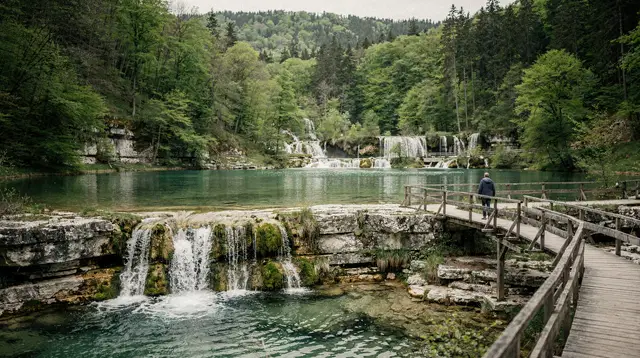
Plitvice Lakes Tour Tips: What to Know Before You Go
What do I need to know before visiting Plitvice Lakes from Zadar?
Plitvice Lakes National Park is roughly 120–130 km from Zadar, about a 2-hour drive. In summer, buy timed entry tickets online in advance and pick Entrance 1 or Entrance 2. Swimming is strictly forbidden throughout the park, and the nearby watermill village of Rastoke is a separate stop north of the park, not part of it.
Getting the basics right before you go
Plitvice Lakes National Park is the single most popular day trip from Zadar, and also the one where a little preparation pays off the most. Unlike a stroll around Zadar’s Old Town, Plitvice is a full national park with timed tickets, marked routes and firm rules — get the logistics wrong and you can lose hours of a day you planned around this one stop. This guide covers what actually matters: distance and drive time, how tickets work, the two entrances, the no-swimming rule, and the frequent point of confusion between the park itself and the nearby village of Rastoke.
If you’d rather have someone else handle the driving, parking and ticket queue, a guided day trip from Zadar removes most of the friction covered below. But even on a guided tour, knowing these details in advance makes the day easier.
How far is Plitvice from Zadar, really
Plitvice Lakes National Park sits roughly 120–130 km from Zadar, which works out to about 2 hours of driving each way under normal conditions. That figure can stretch in July and August, when traffic on approach roads and around the park’s parking areas builds up, especially in the late morning as tour buses and self-drivers arrive together.
Because of that round-trip drive, most people treat Plitvice as a dedicated day — not something to combine with another major inland stop like Krka National Park on the same day. If you’re weighing the two parks against each other before committing a full day to either, our Krka vs Plitvice comparison breaks down how they differ.
| From Zadar | Approx. distance | Approx. drive time |
|---|---|---|
| Plitvice Lakes National Park | 120–130 km | ~2 hours |
| Krka National Park (for comparison) | 85–90 km | ~1.5 hours |
For travelers without a rental car, a guided tour or the public bus route is the practical way to get there — see our notes on the bus from Zadar to Plitvice and Krka if you’re planning independently.
Tickets: buy online, especially in summer
Plitvice uses a timed-entry ticket system, and in the summer high season (roughly July–August) that system matters a lot. Popular entry windows can sell out, particularly for mid-morning slots when light is good for photos and the day is still cool. Buying online in advance, rather than showing up and hoping to buy at the gate, is the safer approach during peak months.
We won’t quote a specific ticket price or a specific opening hour here — those change by season and by year, and printing a number that goes stale is worse than not printing one. For the current, accurate figure, check the official park ticket page directly, or book through a listed tour that bundles entry with transport, such as a guided walking tour of Plitvice or an early access tour timed to beat the biggest crowds.
If you’d rather not manage tickets, timing and parking yourself, a guided option takes that off your plate:
a full guided day tour covering the park’s main trails from ZadarFor travelers who prefer a smaller group and a pace set around their own interests rather than a set itinerary, there’s also:
a private guided tour of Plitvice LakesEntrance 1 vs Entrance 2: which one do you need
Plitvice has two main entrances along the road that runs past the park, generally referred to as Entrance 1 and Entrance 2.
- Entrance 1 sits closer to the Lower Lakes, including some of the park’s most photographed viewpoints and waterfall overlooks. Many shorter routes and first-time visits favor starting here.
- Entrance 2 sits nearer the Upper Lakes and Kozjak, the largest lake in the park, where the electric boat crossing operates.
Both entrances connect into the same trail network, boardwalks, shuttle bus and boat system once you’re inside, so there’s no wrong choice for a self-planned visit — you’ll circulate through much of the same territory either way given enough time. What matters more is checking which entrance your specific ticket, tour, or parking reservation is tied to, since tour operators and route plans typically specify one. If you’ve booked a guided tour, your entrance will be assigned as part of that booking; if you’re going independently, decide based on which route number you intend to walk and enter at the matching side.
For a tour that includes a boat crossing across Kozjak as part of the standard route, consider:
a guided tour that includes the boat ride across Kozjak LakeThe rule that catches people out: no swimming, anywhere
Plitvice Lakes National Park bans swimming throughout its territory — in every lake, at the base of every waterfall, along every stretch of shoreline the trails pass. This isn’t a soft guideline; it’s actively enforced by rangers, and it exists year-round, not just during busy months. Given how clear and turquoise the water looks from the boardwalks, this is consistently the rule first-time visitors are most tempted to break — and consistently the one worth restating clearly before you go, rather than finding out at the water’s edge.
This same logic applies at Krka National Park to the south, where swimming at the main waterfall, Skradinski buk, has been banned since 2021. If you’re building a wider itinerary around North Dalmatia’s national parks, treat “no swimming” as a standing rule at both, not a seasonal restriction that might loosen up.
Plitvice the national park vs Rastoke the village: they are not the same place
This is the single most common mix-up travelers make when researching this trip, and it’s worth being precise about. Plitvice Lakes National Park is the UNESCO World Heritage Site (inscribed 1979) with its 16 terraced lakes and connecting waterfalls, reached through Entrance 1 or Entrance 2 on a timed ticket. Rastoke, by contrast, is a small watermill village in the town of Slunj, sitting north of the park — a cluster of old wooden mills built over smaller waterfalls where the Slunjčica river meets the Korana.
Rastoke is genuinely worth a stop, and it pairs naturally with a Plitvice day since it sits along the same general route north from Zadar. But it is a separate destination with its own access, its own scale, and no swimming ban tied to the national park’s regulations (though it has its own local rules). Do not plan your day assuming a Rastoke stop is “included” in a Plitvice park ticket — it isn’t, and treating the two as one place is the easiest way to misjudge how much time you’ll need.
For more on Rastoke specifically, see our Rastoke watermill village day trip guide.
Walking routes and how much time to budget
Plitvice’s official numbered routes range from short loops of around two hours to longer combinations that can take most of a day, mixing boardwalk sections, a shuttle bus between the Lower and Upper Lakes area, and the electric boat crossing on Kozjak. Which route suits you depends on mobility, time available, and whether you’re traveling with young children or anyone who tires on long boardwalk stretches.
If you’re short on time because of the round-trip drive from Zadar, a shorter loop focused on the Lower Lakes near Entrance 1 still covers the park’s best-known waterfall views. If you have more time and want to see Kozjak Lake and the Upper Lakes area, plan for a longer combined route and expect the visit to fill most of a day once travel time is added.
For travelers who want to cover more ground with less walking, an alternative to the standard boardwalk routes exists:
a buggy tour that covers more of the park’s routes with less walkingHalf-day options also exist for travelers combining Plitvice with another stop or working around a tighter schedule:
a half-day tour focused on the park’s main highlights| Route style | Rough time needed | Best for |
|---|---|---|
| Short Lower Lakes loop | ~2–3 hours | Tight schedules, Entrance 1 access |
| Combined Lower + Upper Lakes with boat | ~4–6 hours | First-time visitors wanting the full park |
| Buggy-assisted touring | Varies, less walking | Limited mobility, hot weather |
Practical tips for the day
- Arrive early if you can. The park is busiest from mid-morning through early afternoon, especially in July and August; an early start (or an early-access tour) means calmer boardwalks and better light for photos.
- Wear proper footwear. Boardwalks can be slippery near waterfall spray, and longer routes involve real walking distance — sandals are a common regret here.
- Bring water and a light layer. Much of the walk is shaded near the lakes, but open stretches and the shuttle bus stops can mean waiting in direct sun during summer.
- Don’t rely on the ticket booth in peak season. Book online ahead of time if you’re visiting July–August; walking up without a reservation is the riskiest way to plan this trip in high season.
- Keep the return drive in mind. A 2-hour drive back to Zadar after a full day on your feet is worth factoring into your evening plans — don’t schedule anything demanding for the same night.
- Respect the no-swimming rule. It’s enforced, and it protects the very clarity of water that makes the lakes worth seeing in the first place.
Is Plitvice worth the trip from Zadar
For most travelers spending several days in the Zadar region, yes — Plitvice is Croatia’s most visited national park and one of its defining landscapes, and the roughly 4-hour round-trip drive is generally considered worthwhile given what’s on the other end. That said, it is a genuine commitment: a full day, firm rules, and a park that rewards a bit of planning far more than a spontaneous, ticketless arrival in August. If you’re deciding whether it fits your specific trip, our longer discussion of whether Plitvice is worth it in August goes into more detail on peak-season crowding specifically.
For a wider comparison of how a Plitvice day fits against other inland options from Zadar, see how many days to spend in Zadar or browse day trips from Zadar: best options to weigh it against Krka, Šibenik or the archipelago.
Plitvice Lakes tour tips: frequently asked questions
How far is Plitvice Lakes National Park from Zadar?
It’s roughly 120–130 km, about a 2-hour drive on good roads. Most day trips from Zadar budget around 4 hours total for driving, leaving most of the day inside the park itself.
Do I need to book tickets in advance?
In the summer high season, yes — tickets are timed-entry and often sell out for popular slots, so booking online ahead of your visit is strongly recommended. For exact pricing and time-slot availability, check the official ticket page or a guided tour listing rather than relying on a fixed number here.
What’s the difference between Entrance 1 and Entrance 2?
Entrance 1 sits closer to the Lower Lakes and the park’s most photographed viewpoints, while Entrance 2 sits nearer the Upper Lakes and Kozjak, the park’s largest lake. Both connect to the same trail network and shuttle boat/bus system once inside, so neither is a wrong choice — but tour operators and route planners usually specify which one a given itinerary uses.
Can I swim in Plitvice Lakes?
No. Swimming is prohibited throughout Plitvice Lakes National Park, no matter how clear or inviting the turquoise water looks. This is one of the most common mistakes first-time visitors make, and rangers do enforce it.
Is Rastoke part of Plitvice Lakes National Park?
No. Rastoke is a separate watermill village in the town of Slunj, north of the park, with its own small waterfalls and old mills. It’s a popular add-on stop on the way to or from Plitvice, but it is not inside the national park boundary and has its own separate access.
How much walking is involved at Plitvice?
The park is covered by wooden boardwalks and trails that loop around and between the lakes, supplemented by an electric boat across Kozjak Lake and a shuttle bus for longer routes. Distances vary by which numbered route you follow, so choose a shorter loop if you’re short on time or traveling with young children.
Is Plitvice worth visiting if I only have one day in Zadar’s region?
For most travelers, yes — it’s the most visited national park in Croatia and a UNESCO World Heritage Site since 1979. Given the round-trip drive, a full-day tour or self-drive trip is the realistic way to see it properly rather than trying to combine it with another major stop the same day.
Plitvice Lakes Tours
Verified deep-linked GetYourGuide tours. Book through these links and we earn a small commission at no cost to you.
GetYourGuide does not provide a product photo for this activity — the image shows the meeting point, photographed by us.