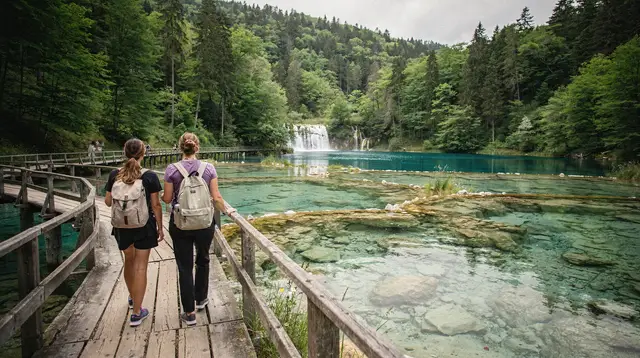
Bus from Zadar to Plitvice and Krka: The Practical Guide
Can you get from Zadar to Plitvice or Krka by bus?
Yes, both national parks sit on routes served by public bus from Zadar's main bus station, with Krka (roughly 85-90 km) usually a shorter ride than Plitvice (roughly 120-130 km). Timetables, frequency and fares change by season, so always check the current schedule directly rather than relying on a fixed number.
Weighing the bus against a tour or a rental car
Zadar sits within striking distance of two of Croatia’s best-known national parks, and the public bus is the option travelers ask about most after “should I rent a car” and “should I just book a tour.” Plitvice Lakes National Park is roughly 120-130 km from Zadar, about two hours by road, while Krka National Park is closer, roughly 85-90 km away. Both are doable as a long day trip from Zadar, and both are reachable by public bus — but the bus asks more of you in planning than a tour does, and it’s worth understanding exactly what that trade-off looks like before you commit a full day to it.
This guide sets out how the bus option actually works, what it does and doesn’t cover, and where it makes more sense than the alternatives covered in our day trips from Zadar overview. It does not include a fixed timetable, frequency or fare — those change by season and operator, and printing a number here that’s wrong by the time you read it does you no favors. Always check the live schedule before you travel.
Getting to the bus station in Zadar
Long-distance and regional buses in Zadar leave from the main bus station, Autobusni kolodvor Zadar, which sits outside the Old Town peninsula. If you’re staying near the historic center — see our guide to where to stay in Zadar — plan for a short taxi, rideshare or local bus ride to reach the station, and build that into your morning rather than assuming you can walk straight from the Sea Organ to a waiting coach. Arrive with margin: on a day trip, missing your outbound departure can cost you the whole excursion, since Plitvice and Krka are far enough that there’s rarely a simple way to catch up.
At the station, look up the current route and departure board rather than relying on secondhand information, since seasonal timetables shift between summer peak and shoulder months. If you’re unsure which platform serves Plitvice-bound or Krka-bound services, ask at the information desk — station staff deal with this question constantly from day-trippers.
The route to Plitvice Lakes
Buses to Plitvice generally run along the inland road corridor that also carries much of the tour and private transfer traffic, given the roughly 120-130 km distance and two-hour driving time. Because it’s a scheduled public service making other stops along the way, expect the bus journey to take longer than the two-hour driving estimate — build in extra time on both legs.
The road passes close to both of the park’s main entrances, Entrance 1 and Entrance 2, so a bus stop near one of them is realistic, but confirm the exact drop-off with the operator before you go, since stop locations and which entrance is closer can vary by service. Once inside, remember that Plitvice Lakes National Park is swimming-forbidden throughout — this is one of the most common mistakes first-time visitors make, drawn in by the clarity of the water, so treat it as a firm rule rather than something to test.
In peak season, Plitvice uses timed entry tickets, and buying online ahead of your visit is strongly advisable — same-day tickets can be limited or involve a wait at the gate, which eats into the time you have before your return bus. If you’re building a bus day around the park, book your ticket slot with your return departure in mind, not the other way around; there’s no flexibility to push your afternoon back if the bus won’t wait.
For a full sense of what’s inside — the terraced lakes, the walking circuits, the boat and shuttle links between them — our dedicated Plitvice Lakes day trip guide covers the layout in more depth, and the one-day Plitvice itinerary lays out a possible schedule you can adapt to your bus times.
The route to Krka National Park
Krka is the shorter trip from Zadar at roughly 85-90 km, and bus services heading south toward Šibenik typically pass through or near Skradin, the gateway town for the park’s best-known feature, the Skradinski buk waterfall. From Skradin, boats run into the park itself; depending on where your bus drops you, you may need a short connecting boat trip rather than walking straight to the falls.
The key rule to plan around: Krka National Park has banned swimming at Skradinski buk since 2021, a standing policy rather than a seasonal one. However tempting the cascades look after a hot bus ride, this isn’t a gray area — treat it the same way you’d treat the Plitvice ban.
Beyond Skradinski buk, the park includes further stops such as Roški slap and the island monastery of Visovac, both typically reached by the park’s own boats rather than the public bus network, so factor in some in-park transfer time on top of your bus journey. Our Krka day trip guide walks through how the different parts of the park connect.
What the bus doesn’t do for you
The honest case for a tour or a private transfer over the bus comes down to what the bus leaves you to handle alone:
| Public bus | Organized tour | |
|---|---|---|
| Park entrance ticket | Bought separately by you | Often included or pre-arranged |
| Drop-off point | Near the park, not always the exact gate | Direct to the entrance or boat dock |
| Schedule | Fixed departure and return times | Set for the day, usually with more buffer |
| Guiding | None | Included on most tours |
| Flexibility | Low — miss it, wait for the next one | Low, but built around the itinerary |
| Typical cost | Lower ticket price | Higher, bundles more in |
If your priority is cost and you’re comfortable managing your own park ticket and timing, the bus is a reasonable way to reach either park. If you’d rather not think about connections, ticket windows or your return departure while you’re trying to enjoy waterfalls, a guided option removes that layer of logistics. A trip like a full-day tour to Plitvice Lakes from Zadar includes transport both ways and takes the timing pressure off entirely, and a boat-and-coach day trip to Krka National Park from Zadar’s port handles the Skradin connection for you rather than leaving it to a bus-and-walk combination.
For travelers who want to see both national parks without renting a car, comparing the two destinations first is worth the ten minutes — our Krka vs Plitvice guide breaks down which suits a single day trip better depending on your interests and how much walking you want to do.
When a rental car beats both options
A rental car sits between the bus and a tour: it costs more than the bus but gives you full control over timing, and unlike a tour it lets you combine stops — for instance pairing Krka with a stop in Šibenik or Primošten on the way back, something neither the bus nor most fixed-itinerary tours allow. If that flexibility matters more than the lower ticket price of the bus, our car rental in Zadar guide covers what to expect.
For a single-focus day without the logistics of driving on unfamiliar roads, though, an organized option like a guided Plitvice Lakes day tour or, if you want to see more of the region in one outing, a combined Krka National Park and Šibenik day trip from Zadar, often ends up simpler than coordinating bus connections around timed park entry.
Can you do both parks in one bus trip?
Combining Plitvice and Krka in a single day by public bus is not realistic. Even though Krka is the shorter leg at roughly 85-90 km, the two parks sit in different directions from each other rather than along one convenient route, and each deserves the better part of a day on its own once you count the walking circuits, waterfalls and any boat connections. Trying to squeeze both into one bus day usually means rushing one park to catch a connecting service, which defeats the point of visiting either.
If you want to experience both without renting a car, the more realistic approach is two separate day trips from Zadar, or a multi-day plan such as our three days Zadar, Krka and Plitvice itinerary, which spreads the parks across different days instead of forcing them into one. Travelers with a car sometimes chain Krka with Šibenik on the same day, but that pairing depends on flexible timing that a fixed bus schedule doesn’t give you.
Seasonal timing for the bus trip
When you travel changes how much this trip asks of you. In July and August, both parks draw their heaviest crowds, bus services run more frequently to match demand, and Plitvice’s timed-entry system becomes closer to essential rather than optional — arriving without a booked slot on a peak summer day can mean a long wait or a sold-out window.
Shoulder season — spring and early autumn — tends to bring lighter crowds at both parks, more comfortable walking temperatures, and slightly less pressure on ticket availability, though bus frequency can also thin out compared with the summer schedule. Our best time to visit Zadar guide covers how the wider region’s climate and crowd patterns shift across the year, which is worth reading alongside the specific bus and ticket points here if you have flexibility in your travel dates.
Planning your day around the bus
A few practical points apply regardless of which park you’re heading to:
- Check the current timetable close to your travel date. Frequency and departure times shift between summer peak season and the quieter shoulder months, and printed or older schedules online can be out of date.
- Book Plitvice tickets online in advance if you’re traveling in summer. Timed entry means arriving without a booked slot can mean a wait, which is a real risk when your return bus has a fixed departure.
- Build in buffer time on both legs. Scheduled buses making intermediate stops take longer than a direct drive, so don’t cut your return connection close.
- Bring cash and a card. Ticket machines, boat transfers within Krka, and small cafés near either park don’t always take every payment method.
- Confirm your return stop before you set off into the park. It’s easy to lose track of exactly where you were dropped once you’re deep in a walking circuit.
If a full day feels like too much for either park by bus, consider shortening the trip: the one-day Krka itinerary is built around a tighter schedule than Plitvice requires, given the shorter distance from Zadar. And if budget is the main driver behind choosing the bus in the first place, our Zadar budget travel guide has more ways to keep a national park day affordable without giving up too much convenience.
Frequently asked questions about the bus to Plitvice and Krka
How far is Plitvice from Zadar, and how far is Krka?
Plitvice Lakes National Park is roughly 120-130 km from Zadar, about two hours by road. Krka National Park is closer, roughly 85-90 km from Zadar. Bus travel times run longer than driving times because of stops along the way.
Is the bus cheaper than a guided tour?
A one-way bus ticket is typically cheaper than an organized tour, but a tour includes park entry, transfers to the exact entrance or boat dock, and a guide, which the bus does not. Compare the total cost and time once entrance tickets and any connecting transport are added, not just the ticket price.
Where do buses to Plitvice and Krka leave from in Zadar?
Long-distance and regional buses leave from Zadar’s main bus station (Autobusni kolodvor Zadar), a short taxi or local bus ride from the Old Town peninsula. Confirm the departure platform and current timetable at the station or with the operator before travel day.
Can you swim at Plitvice Lakes or Krka’s waterfalls?
No. Swimming is banned throughout Plitvice Lakes National Park, and Krka National Park has prohibited swimming at its main waterfall, Skradinski buk, since 2021. Treat both as standing rules, not seasonal restrictions, whichever way you travel.
Do Plitvice tickets need to be booked in advance?
In peak season, Plitvice Lakes uses timed entry tickets that are best bought online ahead of your visit, since same-day tickets can sell out or force a wait. This applies whether you arrive by bus, tour coach or rental car.
Does the bus drop you at the park entrance?
At Plitvice, the main road runs past both park entrances, so a bus stop close to Entrance 1 or Entrance 2 is realistic, though you should confirm the exact stop with the operator. At Krka, the bus typically drops passengers in Skradin or another gateway town, from which a boat or a short walk reaches the park itself.
What’s the downside of taking the bus instead of a tour or rental car?
The bus removes flexibility: you’re tied to fixed departure and return times, you handle your own park tickets and any onward boat transfer, and there’s no guide to explain what you’re seeing. A rental car or organized tour trades a higher cost for more control over timing and routing.
Transport Guides
Verified deep-linked GetYourGuide tours. Book through these links and we earn a small commission at no cost to you.
GetYourGuide does not provide a product photo for this activity — the image shows the meeting point, photographed by us.