Plitvice Lakes Day Trip from Zadar: Complete Planning Guide
Can you visit Plitvice Lakes on a day trip from Zadar?
Yes. Plitvice Lakes National Park is roughly 120–130 km from Zadar, about 2 hours by road, which makes it a comfortable single-day round trip by tour bus, transfer or rental car. Swimming is banned throughout the park, and in summer entry tickets are timed and best bought online in advance.
Why Plitvice Lakes pulls travelers inland from the coast
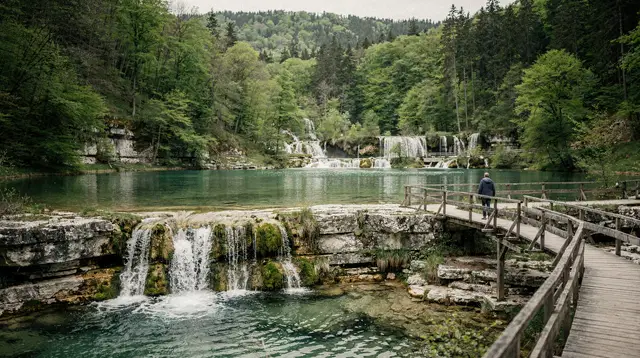
Most first-time visitors to Zadar come for the Adriatic — the Sea Organ, the islands, the boat trips out to the Zadar Archipelago. But a couple of hours inland sits a completely different landscape: 16 turquoise lakes stacked down a limestone valley, linked by dozens of waterfalls, boardwalked so you can walk directly over and beside the water. Plitvice Lakes National Park has been protected since 1949 and was one of the first sites in the world added to the UNESCO World Heritage List, in 1979. It remains Croatia’s most visited national park, and for good reason: nowhere else on this itinerary looks quite like it.
This guide covers how to actually plan the day — the distance and drive time from Zadar, how the ticketing system works, what the trails are like, and the one rule that trips up more visitors than anything else: you cannot swim here, at any lake, at any time of year.
Distance and drive time from Zadar
Plitvice Lakes National Park sits roughly 120–130 km from Zadar, and the drive takes about 2 hours each way under normal conditions. The road climbs off the coast into the Lika highlands, so the scenery changes noticeably along the way — from Adriatic limestone and pine to greener, cooler upland forest.
Because of that 2-hour drive in each direction, a Plitvice day trip from Zadar realistically fills most of a day once you add park time, so it’s worth pairing it with an early start rather than trying to combine it with much else. If you’d rather not drive yourself, an organized guided day tour to Plitvice Lakes handles the transport and typically includes a guide who can walk you through the trail network efficiently, which matters more here than at most parks — Plitvice’s paths branch and loop, and it’s easy to backtrack without realizing it.
For travelers who’d rather set their own pace or are traveling in a small family or friend group, a private guided tour to Plitvice Lakes swaps the group bus for a vehicle and itinerary built around just your party, which can be worth the difference if you want more flexibility on timing.
Tickets: timed entry, and why summer requires planning ahead
This is the detail that catches people out most often. Plitvice Lakes uses a timed ticketing system, especially through the busy season: your ticket is valid for entry at (or from) a specific time slot, not for the whole day at your convenience. In summer, slots sell out, so buying online in advance is strongly recommended rather than showing up and hoping to walk in.
The park has two main entrances, sensibly called Entrance 1 and Entrance 2:
| Entrance | Roughly closer to | Good starting point if you want to prioritize |
|---|---|---|
| Entrance 1 | The Lower Lakes | The park’s classic waterfall viewpoints early in the walk |
| Entrance 2 | The Upper Lakes | The boat crossing and panoramic train, and the largest lake, Kozjak |
Both entrances feed into the same connected network of boardwalks, trails, a shuttle boat across Kozjak Lake, and a panoramic train — so neither is objectively “better,” it’s more about which section you want to see first.
We won’t quote a specific ticket price or a specific departure time here, because both change by season and get revised — for the live, current figures, check the ticket listing at the time you’re booking, or the departure details on the specific tour you choose, rather than relying on any number printed in an article.
If you’d rather not manage timed-entry logistics yourself, this is another place a guided option earns its keep: a private guided Plitvice Lakes tour generally has entry already arranged as part of the package, so you’re not the one racing to secure a summer slot.
The lakes and the trail network
Plitvice’s 16 lakes split into two groups:
- Upper Lakes (Gornja jezera) — generally wider, more forested, with the shuttle boat crossing the largest lake, Kozjak.
- Lower Lakes (Donja jezera) — a tighter limestone canyon, with the park’s most photographed cascades and turquoise pools, closer to Entrance 1.
Boardwalks thread between and often directly over the water, close enough that you can watch the current below your feet in places. Depending on the route you pick, a visit can range from a shorter loop focused on the Lower Lakes to a longer combination that uses the boat and the panoramic train to cover both sections. Because trails branch frequently and several paths loop back near their own start, first-time visitors often do better with a guide or a clearly marked route in hand — wandering in expecting to “figure it out” tends to eat more time than people budget for.
The rule that matters most: no swimming, ever
Swimming is not permitted anywhere in Plitvice Lakes National Park. Not in the turquoise pools that look most inviting on a hot afternoon, not at the base of the smaller waterfalls, not off the boardwalks where the water looks shallow and still. This is a park-wide, standing rule — it is not relaxed in summer and it is not a matter of finding an unofficial spot; the boardwalk system exists specifically so visitors experience the lakes without entering the water, which also protects the travertine formations that keep building the lakes’ terraces in the first place.
If you’re traveling in peak summer heat and want water you can actually get into, that’s simply a different day trip — the coast and islands around Zadar are the place for that, not Plitvice.
Plitvice vs. Krka: which national park to choose
Zadar sits within reach of two of Croatia’s best-known national parks, and travelers often ask which one to prioritize if they only have time for one. The short version: Plitvice is the larger, more dramatic terraced-lake system further inland (about 2 hours from Zadar), while Krka National Park is closer to Zadar (roughly 85–90 km) and centers on a single striking waterfall, Skradinski buk, reached by boat from Skradin. Both parks ban swimming at their main waterfall areas — Krka added this rule from 2021 onward, and Plitvice has never allowed it. For a fuller side-by-side, see our guide on Krka vs. Plitvice: which to choose.
If your schedule allows for both parks on the same trip rather than choosing one, a combined day trip to Krka National Park and Šibenik covers the Krka side on a separate day, which tends to work better than trying to cram both parks into one very long day from Zadar.
Rastoke: the watermill village near Plitvice
A short distance north of the park, in the town of Slunj, sits Rastoke — a small cluster of old watermills perched over cascading channels of the Slunjčica river. It’s a separate, much smaller stop from Plitvice itself, not part of the national park, but its similar water-and-waterfall setting makes it a natural add-on for travelers who want more of that scenery without another long drive. Several day-tour operators pair the two destinations into a single itinerary; see our Plitvice Lakes and Rastoke combo tour guide for how that pairing typically works.
Planning your day: practical notes
- Footwear: boardwalks get wet from spray and can be slippery, especially near the larger waterfalls — shoes with real grip matter more here than sandals.
- Layers: Plitvice sits at a noticeably higher elevation than the coast and can run cooler, particularly in shoulder season (May–June or September–October).
- Water and shade: long stretches of trail have little to no shade, so carry water, especially in the July–August peak season.
- Pace: because the drive alone takes about 2 hours each way, most of your park time is genuinely mid-day — plan an early departure from Zadar to avoid rushing the walk.
- Photography: the Lower Lakes section near Entrance 1 tends to deliver the most classic waterfall shots, but early morning or later afternoon light generally beats the middle of the day.
If you’re building a longer inland loop rather than a single park visit, our guide on how many days to spend in Zadar and our roundup of the best day trips from Zadar both help frame where Plitvice fits against Krka, the islands, and the Pag–Nin coast. Travelers building a full national-parks loop sometimes also add the Zrmanja river and Paklenica National Park on the Velebit slopes, which sit roughly between Zadar and Plitvice geographically, though on a different road route.
For those who want more activity than a walking loop, an adventure trail buggy tour near Plitvice is worth considering as a different way to see the surrounding Lika countryside, separate from the walk inside the park itself.
Best time of year to go
Plitvice is open year-round, but the character of a visit shifts a lot by season. Spring (April–May) brings the fullest waterfalls, fed by snowmelt and rain, and noticeably thinner crowds than summer. Summer (July–August) is the busiest stretch by far — this is when the timed-ticket system matters most, and when early booking stops being optional.
Autumn (September–October) trades some water volume for color, as the forest around the lakes turns, and crowds thin again to something closer to spring levels. Winter is the quietest season of all, with some trails and the boat/train services reduced or paused depending on conditions, and occasional icy boardwalks — worth checking current park notices before planning a winter visit specifically for the trail network rather than just the view.
For travelers weighing when in their trip to fit this excursion, our guide on the best time to visit Zadar covers the coastal season in parallel, since Plitvice’s inland climate and the Zadar coast don’t always move in lockstep — a warm, swimmable week on the Riva can still mean a cool, layered morning at the lakes.
Combining Plitvice with the rest of an inland itinerary
Because the drive already covers real distance and elevation, some travelers prefer to treat Plitvice as one stop in a longer inland loop rather than a single there-and-back day. A multi-day route built around three days covering Zadar, Krka and Plitvice spreads the two national parks and the coast across separate days rather than compressing everything into one long push, which tends to leave more room to actually enjoy each stop instead of racing the clock.
Travelers building an even longer trip sometimes fold in the five days of national parks from Zadar itinerary, which widens the loop to include more of the inland karst country beyond just Plitvice and Krka.
If Plitvice is the only inland stop on your trip and you’re deciding how many days to dedicate to the region as a whole before heading back to the coast, our day trips from Zadar roundup lines it up against the other most common single-day options, from Krka to the islands, so you can see where a long inland day actually earns its place on a short itinerary.
Getting there without a car
Not every visitor wants to self-drive the roughly 2-hour route from Zadar. Organized day tours are the most common solution, with pickup typically arranged from central Zadar and a guide managing timed-entry logistics, trail routing, and the return drive, so the day requires less planning on your end. A half-day tour around Plitvice Lakes is worth checking if you’re tight on time and want a shorter version of the visit rather than a full day, though given the drive time involved, most travelers find a fuller day trip a better use of the journey.
Plitvice Lakes day trip FAQ
How far is Plitvice Lakes from Zadar?
Plitvice Lakes National Park is roughly 120–130 km from Zadar, which works out to about 2 hours of driving each way on the connecting roads.
Can you swim in Plitvice Lakes?
No. Swimming is prohibited throughout Plitvice Lakes National Park, in every lake and at every waterfall, and this is enforced year-round, not just in summer.
Do you need to book Plitvice tickets in advance?
In the summer season, yes. Tickets are timed to a specific entry slot, and the park sells a limited number per slot, so booking online ahead of your visit is strongly recommended to avoid being turned away or delayed.
How many lakes are there at Plitvice?
Plitvice Lakes National Park has 16 terraced lakes, connected by a series of waterfalls, spread across the Upper Lakes and Lower Lakes sections of the park.
What is the difference between Entrance 1 and Entrance 2 at Plitvice?
Entrance 1 sits closer to the Lower Lakes and the park’s most photographed waterfall views, while Entrance 2 is closer to the Upper Lakes and the main boat and panoramic train connections. Both lead into the same trail network once inside.
How long does a Plitvice Lakes day trip from Zadar take?
Counting the drive there and back plus time inside the park, a day trip from Zadar typically fills most of a full day. For exact departure and return times, check the live listing of the tour or transfer you book.
Is Plitvice Lakes worth visiting from Zadar?
For most travelers, yes. It is Croatia’s oldest and most visited national park, a UNESCO World Heritage Site since 1979, and its terraced lakes and waterfalls are unlike anything else along the North Dalmatian coast.
What should I bring on a Plitvice day trip?
Comfortable walking shoes with grip, since boardwalks can be slick with spray; a light layer, since the park sits at higher elevation and is often cooler than the coast; and a refillable water bottle, since much of the walking has no shade.
Plitvice Lakes Tours
Verified deep-linked GetYourGuide tours. Book through these links and we earn a small commission at no cost to you.
GetYourGuide does not provide a product photo for this activity — the image shows the meeting point, photographed by us.