Telašćica Nature Park: Salt Lake, Cliffs and Boat-Only Access
How do you visit Telašćica Nature Park?
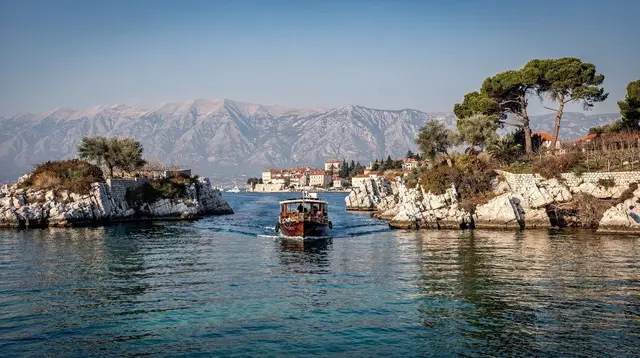
Telašćica is on the southeastern tip of Dugi Otok and has no direct road access from the mainland, so almost every visitor arrives by boat, usually on a day trip from Zadar, Biograd na Moru or Sali that also stops in nearby Kornati National Park. The park protects the salt lake Mir and a line of sea cliffs reaching roughly 160 m.
Telašćica sits at the far southeastern end of Dugi Otok, the long island that forms the outer edge of the Zadar Archipelago. It’s one nature park with two very different faces: a still, landlocked salt lake called Mir on its inland side, and a wall of sea cliffs reaching roughly 160 m facing straight out into the open Adriatic on the other. Between the two, the park covers pine woods, olive groves, a scatter of small coves, and the waters just offshore where the archipelago gives way to open sea.
It sits right next to Kornati National Park, close enough that the two are constantly mentioned together — and just as constantly mixed up. They are not the same place. This guide sets out what Telašćica actually is, how it differs from Kornati, and the practical realities of getting there, since there’s no road in.
What Telašćica Nature Park actually protects
Telašćica was declared a nature park rather than a national park, a distinction that matters less to a day visitor than the geography does. The protected area covers the southeastern tip of Dugi Otok along with the sea and smaller islets around it, and its identity really comes down to two landmarks that sit close together but feel completely different.
The Mir salt lake is the park’s inland centerpiece: a shallow body of salt water separated from the open sea by only a narrow strip of land, yet connected to it through underground channels in the porous limestone. That connection keeps Mir salty, but because it’s shallow and sheltered from wind and waves, it warms up faster than the sea around it and stays noticeably calmer. It has a long-standing reputation as a place where the mud and water are said to have therapeutic qualities, similar to claims made about the mud at Nin further up the coast — treat that as local tradition rather than a medical claim.
A short walk or drive from the lake, the land ends abruptly at the park’s other signature feature: sea cliffs on the exposed southern coast, dropping straight into the Adriatic from a height of roughly 160 m in the tallest sections. These cliffs face the open sea rather than the sheltered channels between the islands, which is part of why they look so different from the low, rocky shorelines typical elsewhere in the archipelago. Most visitors see them from a boat cruising along the base, looking straight up a limestone wall rather than looking down from the top.
Telašćica is not Kornati — and it’s not a substitute for it
This is the single most useful thing to get right before booking anything. Telašćica Nature Park and Kornati National Park are two separate protected areas, run separately, with separate purposes and separate entrance arrangements. Kornati is the archipelago of roughly 89 mostly bare, uninhabited limestone islands, islets and reefs that lies further out to sea from Dugi Otok. Telašćica is the southeastern corner of Dugi Otok itself — one island, with a lake and a cliff line, not a scattered field of islands.
They sit close enough together that a single day-boat trip can realistically visit both, and most operators build their itineraries that way — a swim stop or cruise through part of Kornati, then a call at Telašćica for the lake and the cliffs, or the reverse order. That proximity is exactly why the two names get blended into one trip in people’s memories afterward.
If you want to understand the difference in more depth before choosing between them, see Kornati vs Telašćica: which to visit. If your priority is specifically the bare-island Kornati landscape rather than the lake and cliffs, look at a Kornati National Park boat tour from Zadar that spends more time there.
Getting to Telašćica: boat is effectively the only way
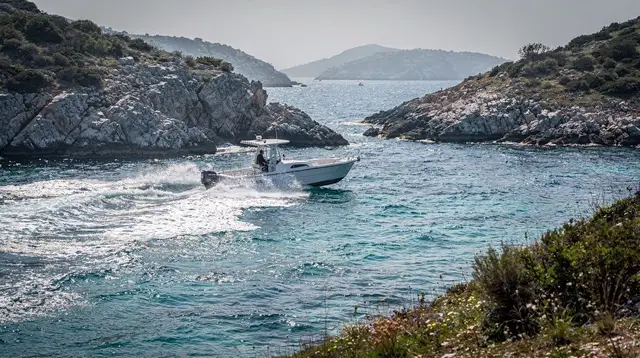
Telašćica has no direct road connection from the mainland or from central Zadar — it sits at the far end of Dugi Otok, and reaching it independently means first getting to the island, then covering the distance to the park itself. In practice, this makes a boat tour by far the simplest option for a day visit, and it’s how the great majority of visitors experience the park.
By organized boat tour. Full-day trips depart from Zadar, Biograd na Moru, and smaller departure points like Sveti Filip i Jakov and Ždrelac, typically combining Telašćica with a Kornati stop, a swim break, and sometimes lunch on board. This is the route worth taking if you want the lake, the cliffs and a taste of Kornati in one outing without organizing ferries and transfers yourself.
By ferry to Sali, then locally. Jadrolinija runs ferries and catamarans from Zadar to Dugi Otok, with Sali — the island’s largest town — the closest settlement to the park entrance. From Sali it’s a short hop by taxi, local boat transfer, or rented transport to reach Telašćica; some visitors even rent a quad in Sali to cover the distance independently, described in our Sali quad rental guide. This route suits travelers who are already staying on Dugi Otok or want more time in the park than a day-tour schedule allows, but it takes more planning than simply booking a boat trip.
As part of a wider archipelago itinerary. If Telašćica is one stop among several islands you want to see, an island-hopping tour across the Zadar archipelago or the more specific Dugi Otok Sakarun beach day trip — which covers the island’s other famous stretch of coast — are worth comparing against a Telašćica-and-Kornati-focused trip before you book.
Boat tours that include Telašćica
The tours below cover the main ways operators combine Telašćica with Kornati, from standard full-day cruises to smaller private charters. Departure points differ, so check which mainland port suits your base before booking.
| Tour | Departure point | Typical focus |
|---|---|---|
| Full-day Kornati and Telašćica boat trip from Biograd | Biograd na Moru | Kornati cruise plus Telašćica lake and cliffs |
| Kornati and Telašćica boat trip from Sveti Filip i Jakov | Sveti Filip i Jakov | Combined Kornati-Telašćica day |
| Kornati and Telašćica boat tour to Lojena beach | Zadar area | Kornati plus a swim stop at Lojena beach near Telašćica |
| Private Kornati boat tour with dolphin watching | Zadar area | Private charter, dolphin sightings possible en route |
| Private Kornati and Telašćica boat tour from Ždrelac | Ždrelac (Pašman) | Private, smaller-group combined tour |
Exact stops, swim time at Mir lake, and whether the park entrance fee is included all vary by operator — read the tour description before booking rather than assuming any two “Kornati and Telašćica” trips are identical. Since this guide won’t state a fixed park entrance price, treat the booking listing as the current source for what’s included and what costs extra.
What a day at Telašćica actually looks like
Most boat itineraries follow a similar rhythm, even if the exact order and timing differ by operator. The boat threads out from the mainland or from a nearby island port, cruises along part of the Kornati archipelago — often with a swim or snorkel stop among the bare limestone islets — then continues to Telašćica. There, the boat typically anchors near the cliffs first, giving passengers a look up at the rock face from the water, before mooring closer to the Mir lake for swimming time.
The lake itself is the part most visitors remember best: warmer, calmer water than the open sea, with none of the current or boat traffic of the channels outside. Full-day trips generally build in an hour or more at anchor near the lake and cliffs combined, plus time for lunch, either packed, purchased on board, or at a stop en route depending on the tour. Because operators structure this differently, it’s worth checking a specific tour’s itinerary for how much time is set aside at Telašćica itself versus the Kornati portion of the day, rather than assuming a fixed split.
Practical notes for visiting
Sun and water exposure. A full day on an open boat means several hours of direct sun with limited shade on many vessels, plus swim stops in open water. Sun protection, a hat and plenty of water are worth planning for regardless of season.
No fixed prices quoted here. Entrance fees for Telašćica are set separately from Kornati’s and can change from year to year, and this guide deliberately doesn’t state a figure that might be out of date by the time you read it. Check the current fee on the park’s own information or, more simply, confirm with your tour operator whether the park entrance is already included in the ticket price — many bundled boat tours cover it.
No fixed hours quoted here. The same applies to opening times: rather than repeating a schedule that can shift with the season, check the live listing for your chosen tour or the park’s own channels for current hours before you travel.
Combine thoughtfully, don’t overreach. Telašćica and Kornati together already make for a full day; adding a third stop, such as a detour to Sakarun beach on the same island, usually means less time at each place rather than a fuller experience. If you have more than one day on Dugi Otok, it’s often better to split the sights across two visits.
Family suitability. The Mir lake’s calm water suits children well, but the length of a typical full-day boat itinerary, plus sun exposure and time at sea, is worth weighing against how younger travelers handle a long day outdoors. For a shorter, more sheltered alternative, an Ugljan and Pašman island-hopping tour covers calmer, closer islands in less time.
How Telašćica compares to other archipelago trips
If you’re deciding between Telašćica and other boat-tour options from Zadar or Biograd, the comparison usually comes down to what you most want to see. A speedboat versus cruise boat comparison is worth reading if you’re unsure which type of vessel suits a Telašćica-Kornati day best, since the two move at very different paces and reach different numbers of stops.
And if Kornati’s bare-island landscape is the real draw rather than the lake and cliffs, a tour weighted toward Kornati National Park itself, possibly paired with Telašćica Nature Park as a dedicated day trip on a separate outing, may suit better than trying to fit everything into one crossing.
Frequently asked questions about visiting Telašćica Nature Park
Is Telašćica part of Kornati National Park?
No. Telašćica Nature Park and Kornati National Park are two separate protected areas that happen to sit next to each other, with Telašćica occupying the southeastern end of Dugi Otok and Kornati covering the string of islands and islets further out. Boat tours very often link the two in a single day because they’re a short sail apart, which is part of why they get confused.
What is the Mir salt lake?
Mir is a shallow, landlocked saltwater lake inside Telašćica, separated from the sea by a narrow strip of land but connected to it underground, which keeps its water salty and noticeably warmer than the open Adriatic. It’s one of the park’s two signature features, along with the sea cliffs.
How tall are the Telašćica cliffs?
The sea cliffs on the park’s southern edge, facing the open sea, rise to roughly 160 m in places, making them among the more dramatic coastal cliff faces in the Zadar archipelago. They’re usually seen from the water on a boat tour rather than approached on foot.
Can you swim in Telašćica?
Yes, swimming is a normal part of a Telašćica visit, both in the sea within the park and in the Mir salt lake, which many visitors treat as a highlight because of its calmer, warmer water. For current rules, any restricted zones and exact conditions, check with your boat tour operator or the park itself on the day.
What does entry to Telašćica cost?
Telašćica charges a separate park entrance fee from Kornati, but this guide doesn’t quote a figure because prices and any seasonal changes are set by the park authority and can shift year to year. Check the current fee on the park’s own channels or confirm what’s included when you book a boat tour, since many tours bundle the entrance fee into the ticket price.
Do boat tours to Telašćica also stop at Kornati?
Most full-day boat trips from Zadar, Biograd na Moru or Sveti Filip i Jakov combine Telašćica with a swim stop or cruise through Kornati National Park, since the two parks are close enough to cover in one day. Read the tour description carefully, as some itineraries emphasize Kornati with only a brief Telašćica call, while others spend more time at the salt lake and cliffs.
How do you get to Dugi Otok without a tour?
Jadrolinija car ferries and passenger catamarans run from Zadar to Dugi Otok’s ports, including Sali, the island’s main town and the closest settlement to Telašćica. From Sali, the park entrance is reachable by a short taxi, boat transfer, or, for some travelers, on foot or by rented quad, though most people still find a boat tour the simplest way to see the salt lake and cliffs together.
Is Telašćica suitable for a family day out?
Families visit regularly, especially for the calmer swimming in Mir lake, but a full-day boat itinerary with sun exposure and several hours at sea is worth weighing against younger children’s stamina. Shorter, more sheltered island-hopping tours around Ugljan and Pašman are a gentler alternative if a long open-water day feels like too much.
Island Hopping Cruises
Verified deep-linked GetYourGuide tours. Book through these links and we earn a small commission at no cost to you.
GetYourGuide does not provide a product photo for this activity — the image shows the meeting point, photographed by us.