Island Hopping from Zadar: A Guide to the Archipelago
What does island hopping from Zadar actually involve?
It means joining a boat trip that stops at two or more islands in the Zadar Archipelago in a single day — typically a mix of Ugljan, Pašman, Dugi Otok or the Kornati islands, chosen by the operator running the route. The exact combination, timings and price vary by trip, so check the current listing rather than expecting a fixed plan.
What “island hopping” means around Zadar
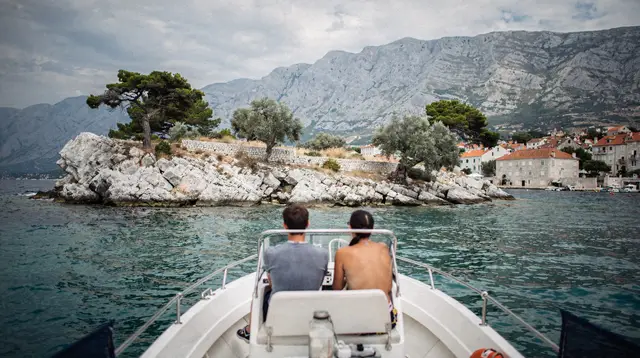
Zadar sits at the edge of an archipelago, not a single island — that is the whole reason island hopping works here. Step off the Riva and the sea in front of you is scattered with more than 300 islands, islets and reefs, ranging from farmed, inhabited land a few minutes offshore to bare limestone reefs an hour out that see nobody but the occasional boat crew. Island hopping is simply the practice of stringing two or more of these stops into a single day rather than committing to just one.
There is no official checklist of which islands count as a “hop.” In practice, the term covers everything from a short, sheltered loop around Ugljan and a nearby islet, to a long open-water run into Kornati National Park with a stop at Telašćica Nature Park on Dugi Otok. What ties them together is the boat itself: you are not driving or catching separate ferries between stops, you are on one vessel that does the connecting for you, usually with swim breaks built in along the way.
This matters for how you plan a trip. Rather than picking “the island-hopping tour,” it is worth picking the kind of hop that matches what you want to see — because the islands on offer are genuinely different from each other, not variations on the same theme.
The islands in play, and how different they are
The single most useful thing to understand before booking is that the Zadar Archipelago is not visually uniform. A boat that hops from Ugljan to Kornati is not showing you two versions of the same island — it is showing you two different landscapes that happen to sit in the same stretch of sea.
Ugljan and Pašman, the two islands closest to Zadar, are green. Centuries of cultivation have left them covered in olive groves, small vineyards and fig trees, with quiet stone villages like Preko facing the city across a narrow channel. A hop that includes Ugljan tends to be calm, close to shore, and framed by cultivated land rather than open water — this is the gentlest version of island hopping in the region, and often the one best suited to families or shorter days.
Dugi Otok (“Long Island”) is a shift in scale and character. It runs roughly 45 km north to south, with a rockier, more exposed west coast facing the open Adriatic and a gentler, settled east coast facing the mainland. Its standout features — the Telašćica Nature Park with its saltwater lake and sea cliffs, and the pale shallows of Sakarun beach — sit at opposite ends of the island and are rarely covered by the same short trip, which is one reason operators build separate routes around each.
Kornati National Park is the extreme version of the contrast. Where Ugljan is soft and green, Kornati is bare, pale limestone — roughly 89 islands, islets and reefs with almost no permanent population and very little vegetation beyond scrub. It has no bridges, no car ferries, no roads; the only way in is by water. Boats that combine a Kornati stop with somewhere greener, like a Pašman channel or the Ugljan coast, are deliberately showing that range in a single day — cultivated island to stripped-back rock, often within a couple of hours of each other by boat.
Biograd na Moru, on the mainland coast opposite the archipelago, functions differently again: it is not an island itself but a common departure point for hops heading toward Kornati and the islets around it, alongside Zadar.
Because these landscapes differ so much, the “best” hop depends entirely on what a traveller wants from the day — gentle and green, dramatic and bare, or a bit of both.
How routes are actually built
Operators do not run a single fixed island-hopping route. They build several, and the combination on any given boat depends on the season, the vessel, and how far out into open water that operator is licensed and equipped to go.
A shorter, calmer hop typically stays close to Zadar and sticks to sheltered channels — this is the kind of trip that might link Ugljan with a small islet or a swim stop along the Pašman channel, without venturing into open Adriatic swell. These trips tend to run on smaller boats and suit travellers who want to be back in Zadar by mid-afternoon.
A longer hop pushes further out, often toward Dugi Otok and into Kornati National Park itself, sometimes adding a Telašćica stop for the saltwater lake and cliffs. These routes generally take most of the day, since Kornati is a genuine open-water crossing rather than a short hop across a channel, and the park’s scattered islets reward slower cruising rather than a quick pass-through.
Because the exact stops, order and timing shift by operator, season and even weather on the day, it is not useful to describe a single itinerary here as if it were fixed. The honest approach — and the one worth applying whenever you compare trips — is to read what a specific listing actually promises to visit, rather than assuming every “island hopping” tour covers the same ground.
a private boat route into the Kornati islands is one way to see that bare-limestone landscape on your own schedule, without matching a group’s pace.
Ugljan and Pašman: the short hop
If the goal is a relaxed day rather than a long open-water haul, Ugljan and Pašman are the pair most trips build around. Both sit close enough to Zadar that the crossing itself takes only minutes, and both are joined to each other by a bridge at Ždrelac, which is part of why they are so often paired on the same route.
The appeal here is the olive groves and stone villages rather than dramatic scenery — Preko, on Ugljan, faces Zadar’s Old Town directly across the channel, and the tiny islet of Ošljak sits just offshore from it, small enough to walk around in well under an hour. A hop that covers this pair usually includes at least one swim stop in a quiet cove, plus time in a village for coffee or lunch, and suits travellers who want a lighter day without giving up the feeling of being properly out on the water.
a private boat trip out to Ugljan keeps this shorter hop flexible if a group tour’s fixed schedule does not suit your day.
Dugi Otok and Kornati: the long hop
Trips that push further out are a different proposition. Reaching Dugi Otok or Kornati National Park means committing to open water rather than sheltered channels, and operators plan for that with faster boats and longer days.
Kornati in particular has almost nothing built on it — no permanent settlements to speak of, no roads, largely bare pale rock rising out of very clear water. It is one of the more striking landscapes on this coast precisely because it looks so different from the cultivated islands closer to the mainland, and a hop into the park is often paired with a stop at Telašćica Nature Park on Dugi Otok, where the saltwater lake Mir and sea cliffs give a different kind of dramatic scenery within the same general area.
a full day covering both Telašćica and the Kornati islands is built specifically to combine those two landscapes rather than choosing between them, though check the listing for its current stops before booking, since routes here can shift with sea conditions.
For a faster-paced version that still covers several stops with time in the water at each, a speedboat route to three islands with swimming and snorkelling is built around exactly that kind of multi-stop day.
Choosing a hop: what actually differs between trips
Rather than a fixed itinerary, it is more useful to know which questions separate one island-hopping trip from another, since the answers change the day more than the marketing copy usually suggests.
Boat type changes the ride itself. A speedboat covers ground quickly and can reach further-out stops like Kornati within a manageable day, but the crossing is louder and choppier than a slower cruiser. A larger boat or a semi-submarine style vessel trades speed for a steadier, quieter ride — worth checking if seasickness is a concern.
Group size shapes how much say you have over stops and pacing. A shared group tour follows a set route with a set group, while a private charter can adjust where it stops and for how long, at a different price point.
Distance and destination is the biggest single factor. A route confined to Ugljan and Pašman stays close to Zadar in sheltered water; a route into Dugi Otok or Kornati is a genuinely longer day involving open-water crossings, and it is worth confirming which islands a given trip actually reaches before comparing it to a shorter, cheaper option.
Season affects both what is running and how busy it feels. Peak months (July–August) bring the widest choice of departures and the warmest water — sea temperatures on this stretch of the Adriatic typically run around 23–26°C in high summer — but also the most crowded stops. Shoulder months like May–June and September–October thin the crowds while keeping conditions comfortable enough for swimming.
| What to check | Short hop (Ugljan/Pašman) | Long hop (Dugi Otok/Kornati) |
|---|---|---|
| Typical distance from Zadar | Close, sheltered channels | Further, open-water crossing |
| Landscape | Olive groves, stone villages | Bare limestone, sea cliffs |
| Best suited to | Families, shorter days, calmer seas | Travellers wanting dramatic, remote scenery |
| Common pairing | Small islets, Pašman channel | Telašćica Nature Park |
Whatever combination you choose, the specifics — exact stops, timings, swim breaks and current pricing — belong to the individual tour listing, since they vary by operator and change with the season.
Planning around an island-hopping day
A few practical points apply across nearly every version of this trip, regardless of which islands are on the route.
Departure point. Most island-hopping boats leave from Zadar’s harbour area near the Old Town, though some Kornati-focused routes also depart from Biograd na Moru, which sits closer to the park. Confirm the meeting point on your specific booking rather than assuming it matches the city centre.
What to bring. A swimsuit and towel are essential if swim stops are part of the plan, along with reef-safe sunscreen and a hat — there is often little shade once you are away from the boat’s cabin. The wind picks up on open water even on a warm day, so a light layer is worth having even in summer.
Timing your season. Summer sea temperatures around 23–26°C in July–August make swim stops genuinely comfortable; winter temperatures drop to roughly 13–15°C, which rules out casual swimming even if the scenery itself is still worth seeing on a calmer, quieter boat.
Independent alternatives. Ugljan and Pašman are reachable by regular Jadrolinija ferries and smaller passenger boats without booking a tour at all, which suits travellers happy to plan their own day and skip the guided commentary. Kornati and Telašćica are a different matter — there is no public ferry network reaching into the park, so a tour or a private charter is effectively the only practical way in for most visitors.
If you are weighing whether Kornati deserves the extra distance over a closer alternative, our comparison of Kornati against Telašćica breaks down what each actually offers. For the mechanics of choosing a boat type itself, speedboat versus cruise boat tours from Zadar covers that decision in more depth.
And if island hopping is one piece of a longer stay, our guide to island hopping across Ugljan and Pašman and our Dugi Otok Sakarun beach day trip cover those routes on their own terms, alongside the Kornati boat tour from Zadar for a deeper look at that park specifically.
Frequently asked questions about island hopping from Zadar
What is island hopping from Zadar, exactly?
It is a boat-based day trip, usually by speedboat or small cruiser, that visits more than one island or islet in a single outing rather than sticking to one destination. Operators combine stops from the Zadar Archipelago — Ugljan, Pašman, Dugi Otok, the islets off Biograd, or Kornati National Park — into routes that change with the season and the boat.
Which islands get combined on a typical hop?
There is no single fixed combination. Some routes pair Ugljan and a smaller islet for a short, calm outing; others run further out to Dugi Otok or into Kornati National Park, sometimes adding Telašćica Nature Park. Check the specific tour listing for its actual stops before booking.
Do I need to book a Kornati stop separately from an Ugljan or Pašman trip?
Usually yes. Kornati is a national park reached only by boat and often sold as its own route or combined with Telašćica, while shorter hops around Ugljan and Pašman tend to run as separate, calmer itineraries closer to Zadar. Read each listing to see exactly which islands it covers.
Is island hopping from Zadar suitable for non-swimmers or families?
Many boats build in swim stops but do not require swimming, and life jackets are standard equipment on board. Sea conditions and stop selection vary by operator, so if you are travelling with children or non-swimmers, check the trip description for swim-stop details and boat type before booking.
What should I bring on a full day of island hopping?
A swimsuit and towel, reef-safe sunscreen, a hat, and layers for wind on open water, since the Adriatic breeze picks up once the boat leaves sheltered coastline. Cash for small purchases on any island stop is also useful, as card machines are not guaranteed on smaller islands.
How much does an island-hopping tour from Zadar cost?
Prices depend on the operator, the boat, the islands covered and the season, so no single figure applies across all routes. Check the current price on the specific tour listing rather than assuming a flat rate.
Can I do island hopping independently, without a tour?
Yes, using Jadrolinija ferries and local passenger boats to islands like Ugljan and Pašman, but Kornati and Telašćica are effectively tour or private-charter territory since there is no public ferry network reaching deep into the park. A guided trip also saves the logistics of matching ferry timetables across two or three islands in one day.
Boat Tours
Verified deep-linked GetYourGuide tours. Book through these links and we earn a small commission at no cost to you.
GetYourGuide does not provide a product photo for this activity — the image shows the meeting point, photographed by us.