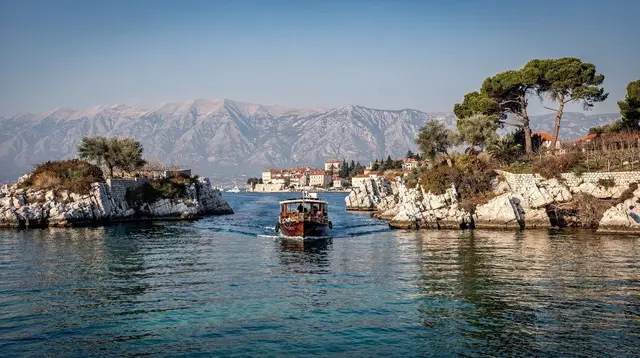
Kornati National Park Boat Tour from Zadar
Can you visit Kornati National Park without a boat tour?
No. Kornati National Park has no roads, no bridge and no scheduled ferry-car crossing to the mainland — it is reached only by boat, on an organized tour or a private charter departing from Zadar, Biograd, Murter or Sali.
A national park you can only reach by water
Kornati National Park is one of the strangest and most photogenic corners of the Adriatic, and it is also one of the least accessible in the ordinary sense of that word. Established in 1980, the park protects roughly 89 islands, islets and reefs scattered across the sea south of the Zadar Archipelago. The wider Kornati group — the geographic archipelago, as opposed to the smaller protected core — runs to something like 140 islands and islets in total, which is why you will sometimes see different numbers quoted depending on whether a source means “the park” or “the whole Kornati cluster.”
There is no getting around the one fact that shapes every visit: Kornati has no roads, no bridge and no car ferry. Nothing connects it to the mainland except open water. If a plan for the day involves a rental car, a coach or a scheduled Jadrolinija car ferry, it does not involve Kornati — the only way in is a boat, whether that is a large day-tripper cruiser, a private charter, a sailing yacht or a speedboat. This guide covers what the park actually is, how the boat trips from different towns compare, what the landscape and islands look like up close, and what to check before booking.
What makes Kornati different from a “normal” Croatian island
Most islands along this stretch of coast — Ugljan, Pašman, even much of Dugi Otok — have villages, olive groves, pine woods and at least a scatter of houses. Kornati looks almost nothing like that. The dominant colour is pale grey-white limestone, terraced into dry-stone walls that were built, over centuries, to keep grazing sheep from wandering off cliff edges rather than to mark fields in any conventional sense. Vegetation is thin: low scrub, wild herbs, the occasional olive tree planted by a fishing family, but nothing like the pine cover of Ugljan or the vineyards of Primošten further south.
The result is a landscape that reads as stark and almost lunar from a boat deck, especially where the cliffs on the seaward side of the outer islands — Mana, Piškera, Levrnaka and others — drop straight into the sea. It is not conventionally “green Adriatic,” and that starkness is precisely what draws photographers, sailors and anyone who has already seen the more typical pine-and-turquoise islands and wants something starker.
Almost nobody lives here year-round. A small number of families still use traditional stone houses seasonally for fishing and light farming, much as their ancestors did, but there is no town, no year-round school, no permanent population centre. What visitors find instead are a handful of small konoba restaurants that open for the season, a scatter of jetties for mooring, and — increasingly — restrictions designed to keep the park from being loved to death by summer traffic.
Boat-only, every time: how people actually get there
Because there is no land connection, every visit to Kornati National Park starts with a boat departure from one of four practical bases:
- Zadar — the most common departure point for visitors staying in the Old Town, with the widest range of organized tours but also the longest crossing.
- Biograd na Moru — on the mainland coast opposite the archipelago, noticeably closer to the park than Zadar and a major charter-yacht hub in its own right.
- Murter — the island closest to the Kornati boundary by a wide margin, and the base most serious sailors and repeat visitors choose specifically to cut travel time.
- Sali — on Dugi Otok, useful for anyone already staying on that island or combining Kornati with Telašćica Nature Park, which sits right next door.
None of these routes is fast. Kornati is genuinely offshore, and depending on the departure port and the specific islands a tour visits, the crossing and time inside the park boundary can take up a large part of a day. Exact durations vary by operator, boat type and itinerary, so treat any figure you see elsewhere as indicative rather than fixed, and check the specific tour listing for what is actually promised.
Comparing the main ways to see the park
| Departure port | Typical distance to park | Who it suits |
|---|---|---|
| Zadar | Longest crossing of the four | Visitors based in the Old Town who want one full-day trip without relocating |
| Biograd na Moru | Shorter than Zadar | Travellers already staying on this stretch of mainland coast, or combining with a Biograd sailing day |
| Murter | Shortest crossing | Sailors, repeat visitors, anyone prioritizing more time inside the park over travel comfort |
| Sali (Dugi Otok) | Short, and adjacent to Telašćica | Visitors already exploring Dugi Otok who want to pair Kornati with Telašćica Nature Park |
A large day-tripper boat from Zadar generally means a full day, a set route, and company — often including a lunch stop at a konoba on one of the islands, since several operators build a meal into the itinerary. A private charter or speedboat, from Zadar or elsewhere, trades that scale for flexibility: a smaller group, a route that can bend around weather or a particular bay someone wants to see, and typically a higher price per person. Sailing trips, including full-day sails from Biograd, move slower again but suit anyone who wants the getting-there to be as much a part of the day as the destination.
For a full day on the water from Zadar with a stop for food included, a Kornati boat trip with lunch at the Captain’s House is a straightforward way to see the park without organizing logistics yourself. Travellers who want to pair Kornati with the neighbouring nature park in one outing can look at a combined Kornati and Telašćica beach tour by boat, which takes in Lojena beach on the Telašćica side as well as the Kornati islands themselves.
Speedboat versus cruiser versus sailing day
Not every Kornati trip moves at the same pace, and the choice of boat changes the day more than most people expect.
Large cruisers and day-tripper boats are the default option from Zadar and Biograd: slower, steadier, usually carrying a larger group, and often including a lunch stop. They are the least physically demanding option and the easiest to book without much research.
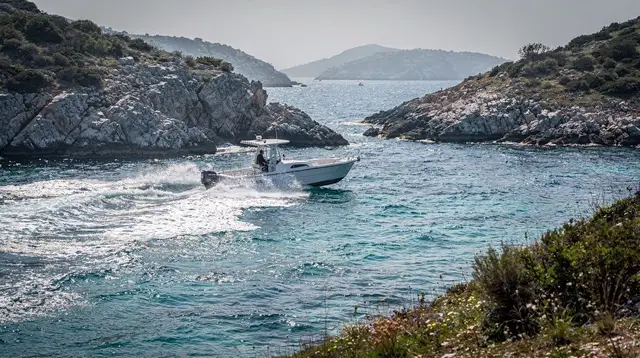
Speedboats cover more ground faster and tend to visit more islands or bays in a single day, at the cost of a bumpier ride and, on some tours, less time lingering in any one spot. A speedboat tour built around swimming and snorkelling stops, such as a speedboat trip to three islands with swimming and snorkelling, suits travellers who want more movement and more stops packed into the day rather than one long cruise.
Private charters put the itinerary in the visitor’s hands, useful for a special occasion or a small group that wants to set its own pace — a private boat tour of Kornati with the chance of seeing dolphins is one way to combine that flexibility with a wildlife-watching angle, since dolphins are occasionally spotted in these waters, though sightings are never guaranteed on any given day.
Sailing days are the slowest and most weather-dependent option, but suit anyone who wants the crossing itself, rather than just the destination, to be part of the experience — a one-day sailing tour from Biograd is a way to reach the archipelago under sail rather than engine.
What a day actually looks like once you’re there
Inside the park, boats generally move between two or three of the more accessible islands rather than trying to cover the whole area, which would take days by boat in any case. A typical stop involves anchoring or mooring off an island, time to walk a short stretch of dry-stone terraces or a rocky headland, and — weather and operator permitting — a swim stop in a sheltered bay. Because conditions, water clarity and which bays are open to boats can change from one week to the next, and because the exact swim spot depends on the operator’s route that day, it is worth checking a specific tour’s description for what it actually promises rather than assuming any fixed beach or bay in advance.
Lunch, where it is included, is typically at a small family-run konoba on one of the islands — the kind of place that exists because a handful of families still work these islands seasonally, cooking fish, or grilled meat and vegetables, for the day’s boat traffic rather than for a resident population. Not every tour includes a meal stop, so check the listing rather than assuming.
Full-day trips that combine several of these elements — multiple islands, a swim stop, and sometimes an add-on like diving — exist for travellers who want to make the most of the long crossing from Zadar. A full-day Kornati National Park tour from Zadar with scuba diving is one option for anyone who wants to go beneath the surface as well as see the islands from the deck.
Kornati and its neighbour, Telašćica
It is worth being clear about a distinction that trips up a lot of first-time visitors: Kornati National Park and Telašćica Nature Park are two separate protected areas that happen to sit right next to each other. Telašćica occupies the southeastern tip of Dugi Otok — outside the Kornati park boundary — and is known for the salt lake Mir and sea cliffs that rise roughly 160 m above the water.
Because the two areas are so close, a number of tours combine a look at both in a single day, and it is common to see itineraries described loosely as “Kornati and Telašćica” even though they are legally and administratively distinct parks. If choosing between them matters to a particular trip, a dedicated look at Kornati versus Telašćica lays out the difference in more detail.
Departing from Biograd or Murter instead of Zadar
Travellers not committed to a Zadar base have real reasons to consider the alternatives. Biograd na Moru sits on the mainland coast directly opposite the archipelago and is a significant charter-yacht hub, which means both organized tours and private charter options are easy to find there, often with a shorter crossing than from Zadar. A Kornati National Park boat tour with lunch from Biograd na Moru is a practical option for anyone staying on that part of the coast rather than in Zadar itself.
Murter, meanwhile, is the closest inhabited island to the park boundary of the four common departure points, which is exactly why serious sailors and repeat visitors often base themselves there instead — less time spent travelling to the park means more time inside it.
What to bring and what to expect
A day on a Kornati boat means sun exposure with very little shade once away from the mainland, so sun protection, a hat and plenty of water matter more here than on a short harbour cruise. Swimwear and a towel are worth packing on the chance of a swim stop, even though no specific bay should be assumed until confirmed by the operator. Because the terrain is bare limestone, sturdy sandals or water shoes help on any island walk — the rock can be sharp and uneven underfoot, quite different from a paved harbourfront.
Sea conditions in the open water beyond the archipelago can be choppier than inside a sheltered bay, so anyone prone to seasickness should factor that in, particularly on faster speedboats. Because Kornati sits fully offshore with limited facilities on the islands themselves, most tours do not allow for much improvisation once underway — it is worth reading what a specific listing includes (lunch, drinks, snorkelling gear, park entrance fee) before booking, since inclusions vary meaningfully between operators.
Comparing your options for a Kornati day
| Trip style | Pace | Good for |
|---|---|---|
| Large cruiser with lunch | Slow, steady, one long stop or two | Groups, families, a relaxed first visit |
| Speedboat multi-island | Fast, several shorter stops | Swimming, snorkelling, covering more ground |
| Private charter | Flexible, sets its own route | Small groups, special occasions, dolphin-watching chances |
| Sailing day | Slowest, weather-dependent | Travellers who want the sail itself to be part of the day |
| Combined Kornati + Telašćica | Varies by operator | Seeing two protected areas without a second full day |
Frequently asked questions about visiting Kornati National Park
Can you drive to Kornati National Park?
No. There is no road, bridge or car ferry to the Kornati islands. The park sits offshore and every visit, without exception, starts on a boat from a mainland or nearby-island port.
How many islands are in Kornati National Park?
The national park protects around 89 islands, islets and reefs. The wider Kornati archipelago, which extends beyond the protected park boundary, runs to roughly 140 islands and islets in total.
Where do Kornati boat tours leave from?
Most tours to Kornati National Park depart from Zadar, Biograd na Moru, Murter or Sali, the last two being noticeably closer to the park boundary than Zadar itself.
Is Kornati good for swimming?
Many Kornati boat trips build in a swimming stop, but the exact bay and whether it lies inside the strict national park zone varies by operator and by conditions on the day, so check the specific tour listing rather than assuming a fixed spot.
What does the Kornati landscape actually look like?
Mostly bare, pale limestone. Centuries of grazing and wind stripped much of the vegetation, leaving stark rock terraces that drop into the sea — a look often compared to a lunar or Karst-desert landscape rather than a typically green Adriatic island.
Is Kornati the same as Telašćica?
No. Kornati National Park and Telašćica Nature Park are adjacent but separate protected areas — Telašćica sits on the southeastern tip of Dugi Otok, just outside the Kornati park boundary, and some tours combine a stop in both.
How long does a Kornati boat tour take?
Full-day trips are the norm given the distance from most departure ports, but exact durations, departure times and what is included vary by operator, so check the specific tour listing rather than assuming a fixed schedule.
Is Kornati National Park inhabited?
Almost not at all. A handful of seasonal fishing and farming families still use stone houses on some islands, but there is no permanent town, no year-round population centre and no infrastructure beyond a few small jetties and konoba restaurants.
Island Hopping Cruises
Verified deep-linked GetYourGuide tours. Book through these links and we earn a small commission at no cost to you.
GetYourGuide does not provide a product photo for this activity — the image shows the meeting point, photographed by us.