Velebit Mountain Adventure Tour: Paklenica, Canyons and Climbing
What kind of adventure activities are there on the Velebit mountain near Zadar?
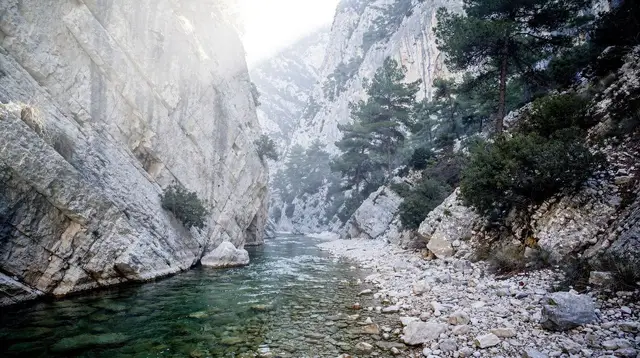
The Velebit slopes above Starigrad hold Paklenica National Park, home to the Velika and Mala Paklenica canyons and the Anića kuk climbing wall, plus trails, buggy routes and access to nearby canyoning on the Zrmanja river. It's the main outdoor-adventure base within reach of Zadar.
Most visitors see Zadar as a coastal city of stone streets, sea views and island ferries. A short distance inland, the coastline gives way abruptly to something else entirely: the long limestone wall of the Velebit mountain range, rising straight out of the Adriatic hinterland above the town of Starigrad. This is where North Dalmatia’s outdoor-adventure side lives — canyons, climbing walls, forest trails and river gorges, all reachable as a day trip from Zadar.
Where the Velebit adventure country actually is
The Velebit is a long mountain range running roughly parallel to the coast, and the part most visitors reach from Zadar is its southern stretch above Starigrad, where the slopes drop into Paklenica National Park. This is the anchor of the whole region for hikers and climbers, and the natural starting point for planning a Velebit day out.
Inland from Paklenica, the same limestone hinterland continues toward the Zrmanja river, a separate canyon system known for kayaking, rafting and canyoning rather than hiking. The two areas — Paklenica’s coastal-facing canyons and the Zrmanja’s inland gorge — are often paired on the same day, since both sit in the Velebit’s foothills within reasonable reach of one another.
It’s worth being precise about scale here: this guide doesn’t state a summit altitude for the Velebit range or a fixed hiking-trail distance, because neither figure is reliable without pinning down exactly which peak or route is meant. If a specific number matters for your trip planning, check it against the official Paklenica National Park information or the tour operator’s own listing rather than a rounded-off guess.
Paklenica National Park: the core of the visit
Paklenica became a national park in 1949, which makes it one of the older protected areas in Croatia, predating the more famous Plitvice Lakes national park designation by several decades. The park protects two adjoining canyons cut into the southern Velebit slopes: Velika Paklenica and Mala Paklenica.
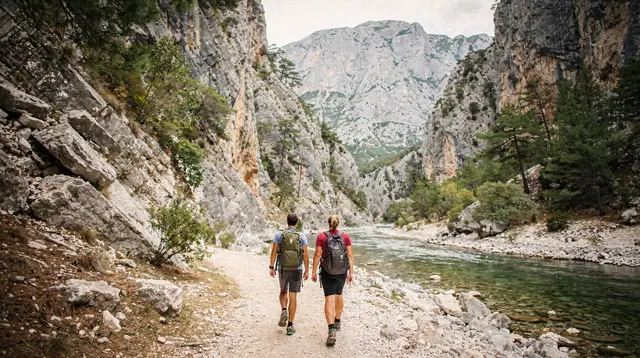
Velika Paklenica, the larger of the two, is the canyon most visitors walk into first. A path follows the canyon floor between steep limestone walls, past an old mill and side trails that climb toward the Velebit ridge above. It’s accessible enough for a casual walker to enjoy the lower stretch, while the trails branching off toward the mountain interior are considerably more demanding and are best left to hikers with the right preparation and gear.
Mala Paklenica, the smaller canyon, sees far fewer visitors and has a quieter, wilder character. It’s the choice for travelers who’ve already done the main canyon walk and want something less trodden, though it generally asks more of the hiker in terms of terrain and navigation.
Anića kuk: the climbing wall
Rising above Velika Paklenica canyon is Anića kuk, a sheer limestone face that’s one of Croatia’s best-known rock-climbing destinations. Routes here range across difficulty levels, and the wall draws climbers from across the region specifically for its scale and setting inside the canyon. Anyone planning to climb should confirm current route conditions and any access rules directly with local climbing information or a guided operator — conditions on a mountain wall change with weather and season in ways a general guide can’t responsibly promise.
What a Velebit adventure day can look like
A typical day built around Paklenica and the wider Velebit hinterland might combine a canyon walk with a photography-focused drive through the mountain scenery, or swap hiking for something faster-paced on wheels. A few ways travelers structure the day:
| Focus | What it involves | Best for |
|---|---|---|
| Canyon walking | Velika Paklenica floor path, side trails toward Mala Paklenica | First-time visitors, families with older kids |
| Photography and scenic driving | Private routes through the Velebit slopes and toward the Zrmanja canyon | Travelers who want views without a long hike |
| Climbing | Anića kuk wall inside Velika Paklenica | Experienced or guided climbers |
| Off-road adventure | Buggy routes through the inland terrain near Zadar | Travelers wanting a faster, less hike-heavy day |
| River add-on | Kayaking, rafting or canyoning on the Zrmanja | Combining mountain and river in one trip |
For a guided private route through the Velebit mountains that also takes in the Zrmanja canyon by camera and car rather than on foot, a private photo tour through the Velebit mountains and Zrmanja canyon covers both landscapes in one outing, which suits travelers who want the scenery without committing to a full hiking itinerary.
For something with more adrenaline and less walking, an off-road buggy adventure through the trails near Zadar is a different way into the same inland terrain, better suited to travelers who’d rather drive the landscape than climb it.
Hiking in Paklenica: what to expect
The canyon-floor walk in Velika Paklenica is the most approachable route in the park, following relatively level ground along the base of the gorge. It’s a reasonable choice for most fitness levels and makes a good introduction to the park’s scenery — sheer rock walls, a stream bed, and the old stone mill partway along the route.
Trails branching upward from the canyon floor toward the Velebit ridge are a different proposition. These climb steadily into more exposed, rugged terrain, and are intended for hikers who come prepared with proper footwear, water, navigation and an understanding of mountain conditions. This guide deliberately doesn’t quote a distance or estimated hiking time for these upper routes, since the range of possible paths and starting points makes any single figure misleading — check current trail information at the park entrance or with a guided operator before setting out.
A related and worthwhile piece of local history: the Winnetou Western film series, shot partly in this Velebit and Zrmanja landscape decades ago, used the dramatic limestone terrain as a backdrop for its frontier scenes. It’s a small but persistent thread in how this stretch of Croatia’s interior is remembered, and hikers passing through the Zrmanja canyon area may come across references to it locally.
Weather and timing on the Velebit
Mountain weather here behaves differently from the coast just a few kilometres away. Conditions on the Velebit slopes can shift with little warning — wind, cloud and temperature swings are all part of hiking or climbing at elevation, even when Zadar itself is warm and clear. This guide won’t promise settled mountain weather on any given day, because it can’t: check a live forecast for the Starigrad and Paklenica area the morning of your trip, and be ready to adjust plans, especially for climbing on Anića kuk or the higher trail branches.
The general Adriatic seasonal pattern still applies loosely: the warmer months from May through October are the more comfortable window for hiking and climbing, with July–August busiest and hottest, and spring or autumn offering cooler conditions for exertion on the trails. Winter access to the higher parts of the park is more limited and weather-dependent.
Combining Paklenica with the Zrmanja river
Because the Zrmanja canyon sits in the same general Velebit hinterland as Paklenica, the two are a natural pairing for travelers who want both a mountain canyon and a river gorge in one trip. The Zrmanja is used for kayaking, rafting and canyoning, typically launched from points like Kaštel Žegarski or Obrovac, and its canyon scenery has its own dramatic character distinct from Paklenica’s dry limestone walls.
Travelers building a longer Velebit-focused day sometimes start with a morning canyon walk in Paklenica, then move inland for an afternoon on or beside the Zrmanja — whether that’s a scenic photo stop or an active kayaking or canyoning session. The private Velebit and Zrmanja photo tour mentioned above is built around exactly this kind of combined route, moving through both landscapes without requiring a full hiking commitment in either.
Planning a Velebit day from your Zadar base
Where you’re staying in Zadar shapes how easily a Velebit day fits into a wider trip. If you’re working out how many days to spend in Zadar overall, a Paklenica or Velebit outing is worth budgeting as close to a full day on its own, since travel time, the canyon walk and any add-on to the Zrmanja all add up. Travelers deciding where to stay in Zadar with an inland excursion in mind may find a base with easy access to the coastal road north — toward Starigrad — more convenient than one deep in the Old Town peninsula, though both work fine with a rental car.
For those building a longer itinerary around the region’s national parks, a three-day Zadar–Krka–Plitvice itinerary or a six-day North Dalmatia road trip can slot a Velebit and Paklenica day alongside visits to Plitvice Lakes and Krka National Park, giving a fuller picture of the region’s parks beyond the coast. Travelers who prefer an outdoor-heavy trip end to end might look at a five-day adventure itinerary for Zadar, which groups Paklenica-style hiking and water activities into a single loop.
If you’re torn between which of the region’s national parks deserves your time, it helps to know Krka versus Plitvice is a different comparison than Paklenica versus either — Paklenica’s draw is canyon walking and climbing on dry limestone, not waterfalls, so it’s less a substitute for the lake parks than a complement to them.
Beyond hiking: other ways into the Velebit hinterland
Not every visitor wants a canyon walk or a climbing route. The quad and ATV tours near Zadar cover some of the same inland terrain on wheels, following forest and hillside tracks rather than the marked park trails inside Paklenica itself — a useful option for travelers who want the landscape’s texture without a long walk.
For those drawn specifically to the river side of the hinterland, a dedicated Zrmanja river kayaking and rafting tour or a focused canyoning tour on the Zrmanja goes deeper into that canyon than a photo-stop pairing allows, for travelers who want the river as the main event rather than an add-on to a Paklenica day.
It’s also worth noting how the Velebit hinterland compares to the region’s coastal and island attractions covered elsewhere on this site. Where a sea kayaking tour around Zadar’s Old Town coastline or an island-hopping tour through the Zadar archipelago stays entirely on or near the water, a Velebit day is the opposite kind of outing — dry limestone, elevation and forest rather than islands and open sea. Together they cover the two very different sides of what North Dalmatia offers beyond the city itself.
Velebit and Paklenica in the wider North Dalmatia trip
Most travelers pair a Velebit day with time elsewhere in the region rather than treating it as a stand-alone visit. A common pattern is to split a longer stay between the coast and the hinterland: a day or two in Zadar itself for the Old Town walking tour, the Sea Organ and the Riva, then an inland day for Paklenica and the Velebit, and — if time allows — a further day toward Šibenik or the Krka waterfalls to round out the region’s landscape variety.
Because Paklenica and the Zrmanja sit inland rather than along the coastal ferry routes, they don’t connect as naturally to island-hopping days as they do to a road trip structured around the mainland. Anyone weighing a rental car against relying on tours for the whole trip should also read the practical side of car rental in Zadar, since self-driving is what makes it easiest to combine Paklenica, the Zrmanja and a stop in Starigrad within a single flexible day, rather than being tied to a fixed tour schedule.
Getting there from Zadar
Paklenica National Park is reached from the coastal town of Starigrad, north of Zadar along the main coastal road. Exact drive times vary by traffic and starting point within Zadar, so rather than quoting a fixed duration here, check the specific transport details on your chosen tour listing, or confirm current road conditions if self-driving. A rental car gives the most flexibility for combining Paklenica with the Zrmanja canyon in one day — see the general guide to car rental in Zadar for the practical side of arranging one.
For travelers without a car, joining a guided tour is the simplest way to reach Paklenica and the Velebit hinterland, since public transport options into the park itself are limited compared to the well-served coastal towns.
Practical notes before you go
Bring sturdy footwear suited to uneven, rocky ground — canyon floors and mountain trails alike are not places for sandals. Carry water, since shade is limited in parts of the canyon and the Adriatic sun is strong even at elevation. A light layer for wind is worth having regardless of season, since conditions on exposed sections of the Velebit can feel noticeably cooler than the coast.
Paklenica charges a park entrance fee, in line with Croatia’s other national parks, but this guide won’t state a specific price or set of opening hours here, since both can change and are best confirmed against the official park source or your tour operator’s listing at the time of booking.
If Paklenica and the Velebit leave you wanting more of the region’s national parks, both Plitvice Lakes and Krka National Park are reachable from Zadar as separate day trips, though neither shares Paklenica’s climbing or canyon-hiking character — they’re built around waterfalls and lake terraces rather than limestone canyon walls.
Velebit and Paklenica: frequently asked questions
How far is Paklenica National Park from Zadar?
Paklenica sits on the Velebit slopes near the town of Starigrad, north of Zadar along the coast. For exact drive times, check a specific tour listing, since traffic and starting point change the figure.
When was Paklenica National Park established?
Paklenica became a national park in 1949, making it one of Croatia’s oldest protected areas.
What are Velika and Mala Paklenica?
They are the two limestone canyons that give the park its structure and its name: Velika Paklenica (the larger, more visited canyon) and Mala Paklenica (the smaller, quieter one).
Is Paklenica good for rock climbing?
Yes. The Anića kuk wall inside Velika Paklenica canyon is one of Croatia’s best-known climbing destinations, with routes for a range of levels. Climbers should check current route and access information locally rather than relying on general guides.
Do I need to be an experienced hiker to visit Paklenica?
No. Velika Paklenica canyon has an accessible path along the canyon floor suitable for casual walkers, while the trails branching up onto the Velebit slopes are more demanding and better suited to experienced hikers.
Can I combine Paklenica with the Zrmanja river?
Yes. The Zrmanja canyon is inland from Paklenica in the same Velebit hinterland, and several operators pair canyon time with kayaking, rafting or canyoning on the Zrmanja.
What should I pack for a Velebit mountain day trip?
Sturdy footwear, water, sun protection and a layer for wind are the basics. Mountain weather on the Velebit can change quickly, so check the forecast the morning of your trip rather than assuming clear conditions.
Is there an entrance fee for Paklenica National Park?
Paklenica charges a park entrance fee like Croatia’s other national parks. For current prices and opening times, check the official park information or a specific tour listing rather than an estimated figure.
Outdoor Adventure Tours
Verified deep-linked GetYourGuide tours. Book through these links and we earn a small commission at no cost to you.
GetYourGuide does not provide a product photo for this activity — the image shows the meeting point, photographed by us.