Šibenik Old Town Day Trip from Zadar
Is Šibenik worth a day trip from Zadar?
Yes — Šibenik's Old Town is one of the best-preserved historic centres on this stretch of the Adriatic, built around the UNESCO-listed Cathedral of St James and four hilltop fortresses. It pairs naturally with Krka National Park, since both sit on the same coast south of Zadar, and works well as either a guided day trip or a self-driven stop.
Why Šibenik earns a day of your trip
South of the Zadar archipelago, past the turnoff for Krka National Park, the coast road drops down into one of the least crowded old towns in this part of Croatia. Šibenik doesn’t get the tour-bus volume of Split or Dubrovnik, and that’s exactly what makes it worth the detour. It’s the oldest native Croatian town on the Adriatic — founded by Croatian rulers rather than Greek or Roman colonists — and its stone-cut Old Town climbs a hillside in tight staircases between four fortresses that ring the harbour and channel.
The headline sight is the Cathedral of St James, a UNESCO World Heritage Site since 2000 and one of the more unusual buildings on the Adriatic coast: it was raised entirely in stone, its vaulted roof interlocked without wooden supports or brick reinforcement, over more than a century of construction. Around it, the four fortresses — St Michael’s, St John’s, Barone and St Nicholas — climb the hillside and guard the channel, giving Šibenik one of the most complete defensive skylines left standing in North Dalmatia. This guide walks through what to see, how the day fits together, and how to combine it with Krka’s waterfalls if you want both in one trip.
Getting oriented: Old Town, harbour and hillside
Šibenik’s Old Town sits on a slope facing a narrow channel that opens onto St Anthony Channel and the sea beyond — a natural defensive position that explains why four separate fortresses were built to guard it. The town centre itself is compact and largely car-free, threaded with stepped lanes (calli) that climb from the waterfront promenade up toward the fortresses. There’s no need for a car once you’re inside the Old Town; most visitors park near the harbour or arrive by organised tour and walk everything from there.
For getting there from Zadar itself, the practical options are a guided day tour with transport included, a self-driven trip along the coastal road, or the regional bus network. Timetables, journey lengths and fares change with the season, so check a current bus schedule or a live tour listing rather than trusting a fixed number here — the same caution applies to museum and fortress opening hours, which shift between summer and winter.
The Cathedral of St James: built entirely in stone
The Cathedral of St James (Katedrala sv. Jakova) dominates Šibenik’s main square and is the reason UNESCO listed the town centre in 2000. What sets it apart structurally is the building technique: its roof, nave and dome were built by interlocking stone slabs without any wooden roof truss or brick vaulting — an engineering approach unusual enough for its time that it took two lead architects across two generations to complete it. Juraj Dalmatinac began the project in the 15th century and developed much of its Gothic-Renaissance transition style; after his death, Nikola Firentinac carried the work forward and finished the dome.
The detail most visitors remember afterward isn’t the dome, though — it’s the exterior frieze running around the three apses at the building’s east end: 71 carved stone heads, each individually sculpted, popularly said to be portraits of real Šibenik citizens from the 1400s who couldn’t afford to fund the cathedral’s construction and had their likenesses carved instead as a form of payment or ridicule. Whether or not that story is literally true, the frieze is genuinely striking up close — every face is different, weathered by five centuries of sea air but still individually expressive. Give yourself time to walk the full length of the apse rather than glancing at it from the square.
Inside, look for the baptistery, considered one of the finest Renaissance interiors on the coast, and the cathedral’s stone dome itself, visible from several points around town as the Old Town’s clearest landmark. A dedicated guided tour of the cathedral is worth it here specifically because so much of what makes the building remarkable — the jointless stone technique, the sequence of architects, the meaning behind the frieze — isn’t obvious without someone pointing it out.
The four fortresses
Šibenik’s defensive ring is unusual for having four separate fortresses rather than one citadel, each built in a different era and covering a different approach to the town.
St Michael’s Fortress (Tvrđava sv. Mihovila) is the oldest and sits directly above the Old Town on a low hill, with the shortest climb from the harbour. Its original medieval structure has been restored as an open-air summer venue, and its walls give a clean panoramic view down over the cathedral’s roofline and out across the channel — a good first stop precisely because it orients you to everything else you’ll see that day.
St John’s Fortress (Tvrđava sv. Ivana) sits higher on the hillside above town, built later to extend the defensive perimeter and cover the inland approach. The climb is longer than St Michael’s, but the payoff is a wider view that takes in the full sweep of the channel and the islands beyond.
Barone Fortress (Tvrđava Barone) occupies another hilltop position with similarly sweeping views, and was built as part of the 17th-century defensive expansion during conflicts with the Ottoman Empire. Its distance from the Old Town centre means it sees fewer visitors than St Michael’s, which can make it the quieter, more atmospheric choice if you only have time for two fortresses.
St Nicholas Fortress (Tvrđava sv. Nikole) is different from the other three: it sits at the mouth of St Anthony Channel, on a small islet rather than the hillside, built specifically to block enemy ships from reaching the harbour. It’s part of the same UNESCO listing — “Venetian Works of Defence between the 16th and 17th Centuries” (inscribed 2017) — that also covers Zadar’s city walls, and reaching it typically requires a short boat trip rather than a walk, since it stands apart in the water.
For a day trip with limited hours, St Michael’s and one of St John’s or Barone is a realistic combination; seeing all four properly, plus the cathedral and the Old Town lanes, is more of a full-day, unhurried plan. A guided option like a walking tour covering three fortresses and the cathedral is built around exactly this trade-off, sequencing the climbs so you’re not backtracking across town.
Walking the Old Town
Between the monuments, Šibenik’s Old Town rewards slow walking. The lanes are steep, narrow and largely stepped — comfortable shoes matter more here than in flatter old towns like Zadar’s peninsula. The main square in front of the cathedral opens onto the waterfront promenade, lined with cafés that make a natural stop between the cathedral and the climb up to the fortresses.
Šibenik has also picked up a following among Game of Thrones fans: the Old Town and St Michael’s Fortress stood in for the city of Braavos in the series, and several tours now walk the specific filming locations, mixing television trivia with the same historical stops you’d hit anyway. If that’s an interest, it’s worth building into the day rather than trying to add separately.
For food, Šibenik’s harbour restaurants lean into fresh Adriatic seafood, and a combined Old Town walking tour with food and wine tastings is a practical way to sample the local kitchen without researching restaurants yourself on a tight day-trip schedule.
Pairing Šibenik with Krka National Park
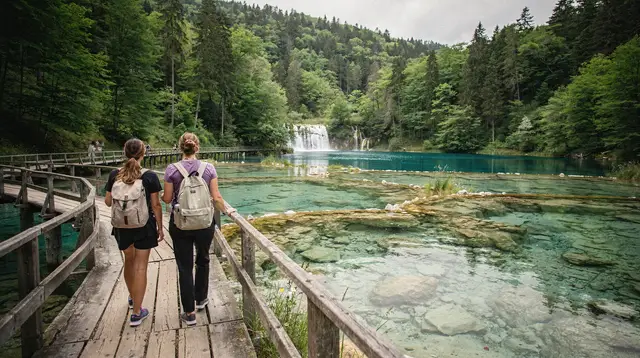
Because Šibenik sits close to the entrances for Krka National Park and the boat-departure town of Skradin, most full-day itineraries from Zadar combine the two rather than treating Šibenik as a standalone trip. The typical shape of the day is a morning at Krka’s waterfalls — reached by boat from Skradin to the Skradinski buk waterfall, where swimming has been banned since 2021 — followed by an afternoon in Šibenik’s Old Town for the cathedral and fortresses, or the reverse order depending on the tour operator and crowd patterns that day.
A combined day trip covering both Krka National Park and Šibenik is the most efficient way to do this without arranging your own transport twice, and it removes the guesswork of timing a self-driven day against two sets of opening hours. If you’d rather focus the whole day on Šibenik’s water side instead of Krka, a sailing trip through the Šibenik archipelago reaches the smaller islands scattered across the channel — a different, quieter pace than the Old Town’s stone lanes.
How to plan your Šibenik day: a quick comparison
| Approach | Best for | What it covers |
|---|---|---|
| Guided day trip from Zadar (Krka + Šibenik) | First-time visitors wanting both in one day | Krka waterfalls, Skradinski buk, Šibenik Old Town and cathedral |
| Self-driven day trip | Travellers with a rental car and flexible timing | Full control over fortress selection and time in each spot |
| Šibenik-focused walking tour | Visitors prioritising the cathedral, fortresses and history in depth | Cathedral, St James frieze, 2–3 fortresses, Old Town lanes |
| Archipelago sailing trip | Visitors who want the water and islands over the Old Town | Šibenik channel, smaller offshore islands, less walking |
Nearby stops if you have extra time
If your day trip has room to extend, the Šibenik riviera continues south and inland to a few other spots covered elsewhere on this site. Primošten, known for its stone-terraced vineyards and Babić red wine, sits a short distance down the coast and makes a relaxed add-on for a riviera boat tour that also visits the islands of Zlarin, Prvić and Tijat — a good way to see the smaller, quieter islands off Šibenik without a full separate trip.
Vodice and Murter round out the coast in the other direction, both useful bases if you’re spending more than a single day around the riviera rather than day-tripping from Zadar.
For planning the rest of your North Dalmatia trip, see how a Šibenik day compares with other options in our roundup of the best day trips from Zadar, or work out whether Krka or Plitvice suits your itinerary better if you’re trying to choose between the two national parks rather than fitting in both.
Šibenik day trip: frequently asked questions
How do I get from Zadar to Šibenik for a day trip?
Most visitors either join a guided day tour that includes transport, or travel independently by car or bus along the coastal route south of Zadar. For exact schedules, journey times and prices, check current bus timetables or a live tour listing rather than relying on a fixed figure.
What is the Cathedral of St James known for?
It is a UNESCO World Heritage Site built entirely of stone, without brick or wood in its structural vaulting, by the architects Juraj Dalmatinac and Nikola Firentinac. Its most distinctive detail is a frieze of 71 carved stone heads running around the exterior apses, said to depict real citizens of 15th-century Šibenik.
Which fortresses can I visit in Šibenik?
Šibenik has four historic fortresses: St Michael’s Fortress, closest to the Old Town and now used as an open-air venue; St John’s Fortress, on the hill above the town with panoramic views; Barone Fortress, also elevated with sweeping views over the channel; and St Nicholas Fortress, which guards the harbour entrance and is part of the same Venetian defence UNESCO listing as Zadar’s city walls.
Can I combine Šibenik with Krka National Park in one day?
Yes, many day trips from Zadar combine the two, since Krka’s entrances and the town of Skradin sit close to Šibenik on the same stretch of coast. Combined itineraries typically split the day between the waterfalls and the Old Town, though the exact balance of time depends on the tour or your own pace.
Was Šibenik used as a filming location for Game of Thrones?
Yes, Šibenik’s Old Town and St Michael’s Fortress were used as the city of Braavos in the show, and several dedicated tours now walk visitors through the filming locations.
Is Šibenik Old Town walkable, and is it suitable for kids?
The Old Town is a compact maze of stone stairways and narrow lanes running up from the harbour toward the fortresses, so it’s walkable but involves gradients and steps rather than flat streets. Families should expect some climbing, especially toward St John’s or Barone Fortress, and plan footwear accordingly.
Do I need to book tickets for the cathedral and fortresses in advance?
Opening hours and ticket arrangements can change by season, so check a current ticket listing or the tour operator’s page before you go rather than assuming a fixed price or schedule.
Šibenik Riviera Tours
Verified deep-linked GetYourGuide tours. Book through these links and we earn a small commission at no cost to you.
GetYourGuide does not provide a product photo for this activity — the image shows the meeting point, photographed by us.