Biograd na Moru to Kornati by Speedboat
Can you get to Kornati National Park from Biograd na Moru by speedboat?
Yes. Biograd na Moru is one of the recognized departure points for Kornati National Park, alongside Zadar, Murter and Sali. Kornati has no roads or bridges to the mainland, so a boat — speedboat or larger cruiser — is the only way in, and departure times, routes and pricing vary by operator and season.
Why Biograd na Moru works as a Kornati departure point
Kornati National Park is one of the defining sights of North Dalmatia, and also one of the least accessible on paper: roughly 89 islands, islets and reefs of bare limestone, protected as a national park since 1980, with no roads, no bridges and no car ferry connecting any of it to the mainland.
The only way in is by boat, and the brief for this stretch of coast names four recognized departure points — Zadar, Biograd na Moru, Murter and Sali on Dugi Otok. This guide is about the Biograd option specifically: what makes the town a sensible base, what a speedboat trip out of its harbour generally involves, and what sits nearby that most Kornati-only itineraries skip.
Biograd na Moru is a working coastal town on the mainland, directly across the water from the Kornati archipelago and the neighboring Zadar Archipelago. It has a marina, a harbour used by day-trip operators, and a compact old core — but the detail that sets it apart from Zadar or Murter as a base is what sits just inland: Vransko jezero, Croatia’s largest natural lake, a protected nature park and bird reserve shared with the neighboring town of Pakoštane.
Getting to Kornati from Biograd: what a speedboat trip involves
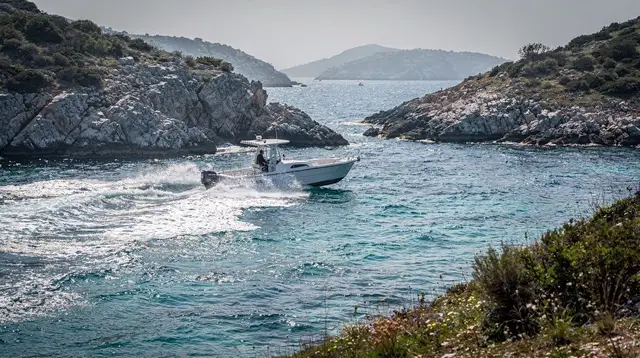
A speedboat departure from Biograd na Moru follows the same basic logic as departures from Zadar, Murter or Sali: a smaller, faster boat than a large day-cruiser, generally carrying a smaller group, running out across open water into the archipelago. Because Kornati has no infrastructure connecting it to the mainland, every visitor — independent traveler or tour guest — arrives the same way, by boat, and a speedboat is simply one category of vessel among the options operators run.
What this guide will not do is invent numbers. Crossing times, exact routes within the archipelago, and how many hours a trip runs all depend on the operator, the specific boat, the weather on the day and which part of Kornati is the destination — a trip built around Lojena beach on Levrnaka island covers different ground than one built around Telašćica Nature Park, which technically sits on Dugi Otok rather than inside the national park boundary itself but is commonly paired with Kornati on the same outing. Pricing works the same way: it varies by boat, season and what is included (lunch, drinks, swimming stops), so the honest answer is to check the specific tour listing rather than rely on a figure that goes stale.
a Kornati National Park boat tour with lunch departing Biograd na Moru is the standard full-park option from this harbour. For travelers specifically drawn to swimming coves and cliffs, a speedboat trip from Biograd to Kornati’s Lojena beach and cliffs narrows the itinerary to one of the archipelago’s better-known swimming spots.
A longer option, a full-day boat trip from Biograd combining Kornati and Telašćica, pairs the national park with the salt lake and cliffs of Telašćica Nature Park on Dugi Otok in a single day.
None of these should be read as accessible without a boat, and none of them should be read as running on a fixed schedule this page can quote — always check departure times, meeting points and current pricing on the tour listing itself.
What the Kornati landscape actually looks like
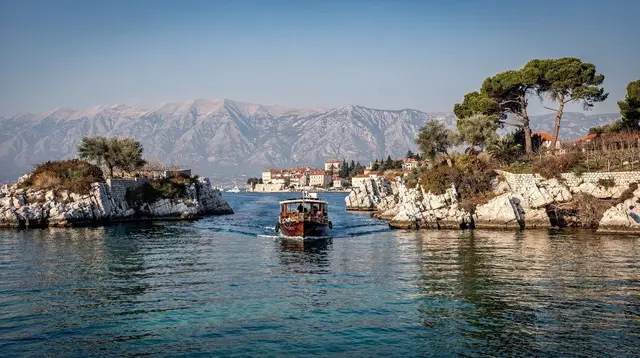
It helps to set expectations before booking. Kornati is not a green, forested archipelago — it is famously bare, a landscape of pale limestone rock, low scrub and dramatic dry-stone field walls built by farmers who once grazed sheep on some of the islands. The starkness is part of the appeal: the contrast between white rock, dark green low vegetation and the deep blue of the Adriatic is what draws photographers and sailors alike, and it is a genuinely different landscape from the pine-covered islands closer to Zadar, like Ugljan or Pašman.
Because the islands are largely uninhabited and undeveloped, facilities are minimal — a handful of seasonal restaurants on some islands, limited shade, and no towns to speak of within the park boundary. This is a landscape best experienced from the water and on brief landings rather than as a base for extended time ashore, which is part of why day trips (rather than overnight stays) are the standard way to see it.
Vransko jezero: the inland half of a Biograd base
The detail that separates Biograd na Moru from a purely coastal base is Vransko Lake (Vransko jezero), sitting just inland next to the town and neighboring Pakoštane. It is Croatia’s largest natural lake, protected as a nature park, and known chiefly as a bird reserve — a very different kind of landscape from the bare limestone of Kornati, with reed beds, wetland habitat and a resident and migratory bird population that draws birdwatchers rather than beachgoers.
This is worth flagging clearly: Vransko jezero and Kornati are not part of the same outing. One is a freshwater lake and wetland a short distance inland; the other is a saltwater archipelago reached only by boat. Treat them as two separate stops that happen to both be convenient from the same base — a boat day out to Kornati on one day, and a quieter, shorter visit to the lake on another, rather than trying to combine both in a single itinerary. Anyone planning a longer stay in Biograd should budget for both trips independently.
Biograd na Moru itself: more than a departure point
It’s easy to treat Biograd na Moru purely as a boat pickup point and skip it otherwise, but the town has its own compact old core worth a slow walk before or after a Kornati trip. Unlike Zadar’s much larger Roman-and-Venetian peninsula, Biograd’s historic center is small enough to see in under an hour — a scattering of stone streets, a seafront promenade and a working marina that fills with sailboats through the summer season. It is a genuinely functional Croatian coastal town rather than a resort built purely for visitors, which is part of its appeal for travelers who find Zadar’s Old Town too busy in high season.
The town’s position also makes it a reasonable stop for travelers island-hopping through the wider Zadar Archipelago without committing to a Zadar base. From Biograd’s harbour, ferries and excursion boats connect toward Dugi Otok and the smaller islands opposite, so a visitor who bases here for a few nights can treat Kornati as one outing among several rather than the sole reason for the stop.
Best time to visit for a Kornati speedboat trip
Kornati speedboat trips run as a seasonal activity, tied to settled summer weather and calm-enough seas for open-water crossings — operators typically scale up departures through the warmer months and scale back or pause them outside that window, though exact seasonal dates depend on each company.
Because the boats are smaller and more exposed than large day-cruisers, wind conditions matter more for a speedboat trip than for other ways of seeing the archipelago — the height of summer, with its more stable weather patterns, is generally the safer bet for a first-time visitor who wants the best odds of the trip running as planned rather than being rescheduled. Shoulder-season travelers should build in flexibility and confirm directly with the operator rather than assuming departures run on a fixed year-round schedule.
Choosing between Kornati departure points
| Departure point | What it’s known for | Best paired with |
|---|---|---|
| Zadar | Widest choice of operators and boat types, largest departure hub | Zadar Old Town, sea organ, city sightseeing |
| Biograd na Moru | Direct harbour access opposite the archipelago, close to Vransko jezero | Vransko Lake birdwatching, quieter coastal base |
| Murter | Closest mainland point to Kornati, sailing and charter culture | Murter village, boat charters |
| Sali (Dugi Otok) | Departure from within the wider archipelago itself, close to Telašćica | Telašćica Nature Park, Dugi Otok beaches |
None of these is objectively “best” — the right departure point depends on where a traveler is already staying. A Zadar-based visitor gains little by transferring to Biograd first, while someone specifically drawn to Vransko jezero, or looking for a smaller, quieter coastal town than Zadar, has a real reason to base in Biograd and depart from there directly.
Beyond Kornati: other water-based options from Biograd
A speedboat harbour like Biograd’s rarely offers only one kind of trip. a dolphin watching tour departing Biograd runs on the same stretch of water without necessarily entering the national park itself, and is worth considering as a shorter, lower-cost alternative or as a second outing for travelers staying several days. Dolphin sightings on any boat trip are never guaranteed — treat this as a chance to see wildlife in open water, not a booked encounter.
For travelers weighing whether to prioritize Kornati at all, it’s worth comparing it against the nearby alternative of Telašćica Nature Park on Dugi Otok, which has its own salt lake and dramatic sea cliffs and is sometimes visited instead of, rather than alongside, Kornati proper — see the dedicated comparison for how the two differ.
Practical notes before booking
A few points worth confirming directly with an operator rather than assuming:
- Meeting point. Biograd’s harbour has multiple berths used by different companies — confirm the exact pickup location on your booking confirmation rather than assuming it is the main town pier.
- What’s included. Lunch, drinks, swimming stops and snorkeling gear vary by tour — the listing for each option above specifies what comes with that particular trip.
- Weather dependency. Speedboat trips into open water are more exposed to wind and sea conditions than larger cruisers; operators may adjust routes or, in poor conditions, reschedule.
- Kornati entrance fee. National park entry is typically handled by the tour operator as part of the trip; independent visitors arriving by private charter should confirm how entry is arranged before departure.
- No road or bridge access. However appealing the map distance from the mainland looks, there is no way to drive, walk or take a car ferry into Kornati — every visit starts on a boat.
Getting from Biograd to the wider region
Biograd na Moru sits on the main coastal route, making it a workable base for more than just Kornati day trips. It connects easily back toward Zadar to the north and toward the Šibenik–Krka riviera to the south, and travelers building a longer North Dalmatia itinerary often use it as one stop among several rather than a single-purpose base — see the Zadar Archipelago island-hopping tour for how nearby islands fit into a broader plan, or the three-day Zadar Archipelago islands itinerary for a fuller multi-day structure.
FAQ: Biograd na Moru to Kornati by speedboat
Is Biograd na Moru a good base for visiting Kornati National Park?
Yes. Biograd na Moru sits on the mainland coast directly opposite the Kornati archipelago, and boats to the park leave from its harbour alongside departures from Zadar, Murter and Sali. It is also close to Vransko jezero, Croatia’s largest natural lake, which most Kornati-focused itineraries do not include.
How do you get to Kornati National Park if you’re not on a tour?
There is no independent way in by land or scheduled ferry — Kornati has no roads, bridges or car ferries connecting it to the mainland. Visitors reach the park by boat, either on an organized tour from Biograd, Zadar, Murter or Sali, or by private charter.
How long does the crossing from Biograd na Moru to Kornati take?
This varies by operator, boat type and which part of the archipelago is the destination, so no fixed duration is safe to quote here — check the specific tour listing for its stated crossing and itinerary times.
What is Vransko jezero and is it worth visiting alongside Kornati?
Vransko jezero (Vransko Lake) is Croatia’s largest natural lake, a protected nature park and bird reserve next to Biograd na Moru and Pakoštane. It is a freshwater wetland landscape, a contrast to the bare limestone islands of Kornati, and makes sense as a separate half-day stop rather than a combined outing on the same day as a boat trip.
Can you swim during a Kornati speedboat trip from Biograd?
Swimming stops are a common feature of Kornati boat trips, typically in coves or at beaches such as Lojena on Levrnaka island, but the exact stops depend on the operator and conditions on the day — check the individual tour listing for what is included.
Is Kornati National Park inhabited?
Barely. The archipelago is mostly bare, uninhabited limestone islands, islets and reefs with no permanent road network, which is part of why it is reachable only by boat and why facilities on the islands themselves are minimal.
What should I pack for a speedboat day trip to Kornati?
Sun protection is the priority — sunscreen, a hat and sunglasses — since the islands offer little shade, along with swimwear, a towel, water and secure footwear for rocky landings. A light layer helps for the open-water crossing, which can be breezy even on a warm day.
Island Hopping Cruises
Verified deep-linked GetYourGuide tours. Book through these links and we earn a small commission at no cost to you.
GetYourGuide does not provide a product photo for this activity — the image shows the meeting point, photographed by us.